
The Psychology of Resilience: Choosing Encouragement Over Praise in 2026



As we navigate the complexities of 2026, the landscape of parenting and education has shifted dramatically. With digital connectivity at an all-time high and academic pressures mounting, the question of how to raise a resilient child is no longer just a dinner-table topic—it is a matter of national health. In my years of analyzing developmental trends and psychological shifts, I have observed that our greatest well-intentioned mistake remains the way we provide feedback to our children.
Most parents believe that telling a child they are “smart,” “talented,” or “the best” builds self-esteem. However, as of 2026, the data suggest the opposite. We are seeing a generation that is more anxious and less willing to take risks, largely due to a phenomenon called “evaluative praise.” In this article, we will explore the critical distinction between praise and encouragement, backed by the latest research from the American Academy of Pediatrics (AAP) and leading developmental psychologists like Carol Dweck. By shifting your approach, you can help your child move from a fragile “fixed mindset” to a robust “growth mindset” that views challenges as opportunities rather than threats.
Disclaimer: This article provides psychological insights based on current research. I[1][2][3]t is not a substitute for professional mental health advice. If you have concerns about your child’s emotional well-being, please consult a licensed pediatric psychologist or a healthcare professional.
The Great Divide: Praise vs. Encouragement
[4]To understand how to build resilience, we must first define our terms. In my experience observing family dynamics, the terms “praise” and “encouragement” are often used interchangeably, but they serve vastly different psychological functions. P[4]raise is evaluative; it focuses on the outcome and the person. E[4]ncouragement is informational; it focuses on the process and the effort.
[5][6][4]Praise sounds like: “You are such a good artist!” or “I’m so proud of you for getting an A.” These statements are conditional and judgmental. They tell the child that their value is tied to their performance or to the adult’s approval. Acc[5][7]ording to a 2024 report from the University of Sydney, “inflated praise”—using words like “incredible” or “amazing”—can actually foster narcissistic traits. When you use this kind of language, you inadvertently create an unrealistic sense of competence. If the [8]child fails later, they perceive their worth as having plummeted because they no longer meet the adult’s high standard.
Encouragement, on the other hand, sounds like: “I see how much time you spent choosing those colors” or “You kept trying even when that math problem got difficult.” Encouragement does not judge the child; it acknowledges the action. Researc[2][4]h from the Extension Foundation (2025) highlights that encouragement helps children develop a stronger sense of self-motivation because they aren’t looking for an external reward or a “high five” to validate their existence. They begin to value the work itself.
The Science of Mindset: Growth vs. Fixed
The fo[2][1]undation of modern resilience training is the work of Stanford psychologist Dr. Carol Dweck. Her research into mindsets has been a cornerstone of educational reform through 2026. Dweck identifies two primary ways children view their own abilities: the Fixed Mindset and the Growth Mindset.
When y[2][1]ou praise a child’s intelligence (“You’re so smart!”), you reinforce a Fixed Mindset. The child[9][1][7] begins to believe that their talent is an innate, unchangeable gift. The danger here is that they become terrified of making mistakes because a mistake would prove they aren’t “smart” after all. In a landmark study involving over 400 fifth graders—frequently cited in 2025-2026 educational workshops—Dweck found that 67% of children praised for their “intelligence” chose an easier task over a challenging one because they wanted to ensure they didn’t lose their “smart” label.
In contrast, Growth Mindset is fostered by process-oriented encouragement. Children with[4][7][1] this mindset believe that abilities can be developed through hard work and good strategies. In the same s[10][9][1][2][6]tudy, a staggering 92% of students who were praised for their “effort” chose the harder task. They weren’t [5]afraid to fail because they viewed the challenge as a way to “get smarter.” In 2026, where the job market and social environments are increasingly volatile, this ability to embrace difficulty is the ultimate marker of resilience.
Table 1: Feedback Comparison and child Response
| Type of Feedback | Example Phrase | Psychological Message | Long-term Outcome |
|---|---|---|---|
| Person Praise | “You’re a natural at this!” | Ability is innate and fixed. | Avoids chal[1][2]lenges to stay “perfect.” |
| Outcome Praise | “Great job on that A!” | Worth is tied to results. | High anxiet[1][5][11]y during testing or competition. |
| Process Encouragement | “I noticed you used a new strategy.” | Effort leads to mastery. | Increased persistence and risk-taking. |
| Social [9][1]Encouragement | “Your help made the team better.” | Value is found in contribution. | Stronger in[12]terpersonal skills and empathy. |
The Resilience Crisis: 2026 Data and Statistics
Why is this shift more urgent now than ever? The 2025-2026 data from the Centers for Disease Control and Prevention (CDC) and the American Academy of Pediatrics (AAP) paints a sobering picture of youth mental health. We are currently facing what the AAP has termed a “national emergency.”
As of 2026, [13]approximately 20% of children aged 3 to 17 have a diagnosed mental, emotional, or behavioral (MEB) disorder. Specific prevalence rates include:
- Anxiety: 9.4% to 11.1% (a significant rise from the 2016 baseline of 8.4%).
- ADHD: 9.8%, affecting roughly 6 million children.
- Depress[14]ion: 4.4% to 5.4%, with rates doubling in some adolescent demographics since 2010.
- “You spent thirty minutes working on that Lego tower. You were really focused on making the base sturdy.”
- “I saw you share your snack with your brother. That was a very kind gesture.”
- “When you didn’t get the answer right the first time, you looked back at the instructions and tried again.”
Furthermore, a 2025 report published in Pediatrics noted that nearly 40% of high school students report persistent feelings of sadness or hopelessness. When we look at these numbers, the link to resilience becomes clear. A child who lacks the tools to handle failure—because they have been “bubble-wrapped” in evaluative praise—is more vulnerable to these conditions. When life gets ha[5]rd, and the “smart” kid suddenly struggles, their identity collapses. Building resilience through encouragement is one of the most effective “preventative medicines” we have against this growing crisis.
Why Praise Backfires: The “Smart” Trap
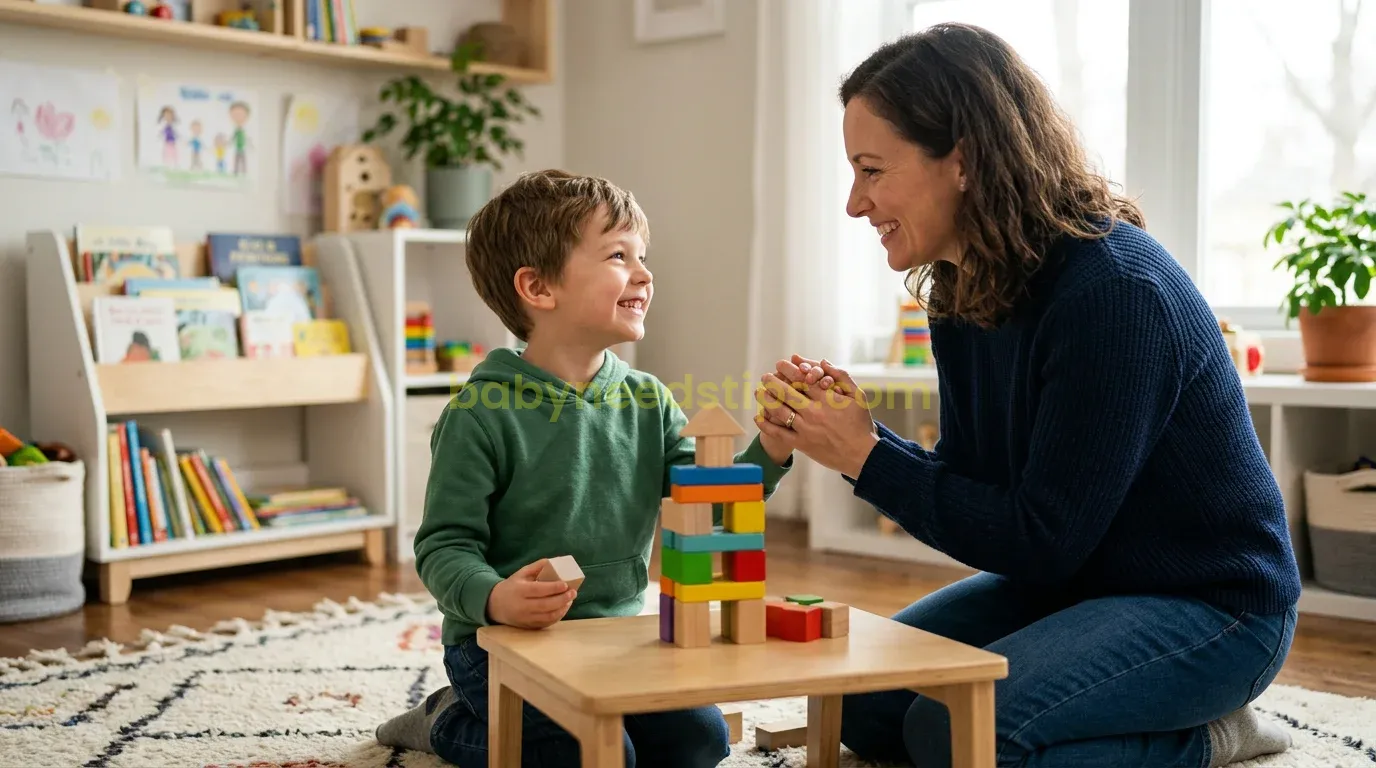
One of the most [1]counterintuitive findings in recent psychology is that praising a child’s intelligence actually lowers their performance. I have spoken with many parents who find this hard to believe. They feel they are being supportive. However, the “smart” trap is a well-documented psychological pitfall.
Research from the University of Pennsylvania (2024) suggests that children who are highly sensitive to their parents’ praise at age 3 show a higher correlation between their mood and their performance by age 7. In other words, i[15]f they aren’t getting that hit of praise, their motivation disappears. They become “prai[1]se junkies.”
Moreover, a 2024 study in Developmental Science found that children praised for their ability were more likely to “self-handicap.” They would intentionally not study or would create obstacles for themselves so that if they failed, they could blame the lack of effort rather than a lack of “intelligence.” This protects their ego but stunts their growth. In my observation[1]s, the children who are told they are “geniuses” are often the most fragile students in the classroom, crumbling at the first sign of a B-minus.
The Anatomy of Encouragement: Process over Person
So, how do we mo[6]ve from praise to encouragement? It requires a fundamental shift in how you observe your child. Instead of looking for a reason to judge (even positively), you look for a reason to connect and notice.
I recommend a technique called “Narrative Encouragement.” Instead of saying “Good job,” try to describe what you see. For example:
This approach does three things. First, it provides specific feedback that the child can use to repeat the success. Second, it remove[4]s the pressure of your judgment. Third, it teaches[4] the child to self-evaluate. When you say, “Ho[4]w do you feel about your project?” rather than “I love it,” you are handing the power of satisfaction back to the child. As noted by Dr. Kenneth Barish in 2024, children need acknowledgment to feel seen, but it must be honest and sincere.
The Role of Intrinsic Motivation
The ultimate goa[16][3]l of choosing encouragement over praise is to foster intrinsic motivation—the internal drive to do something because it is inherently satisfying. In 2026, as we combat the “extrinsic reward” culture of social media likes and gamified learning apps, intrinsic motivation is a rare and valuable asset.
According to Self-Determination Theory (SDT), which has seen a resurgence in 2024-2025 educational research, there are three basic psychological needs for motivation:
- Autonomy: The feeling that you have a choice in what you do.
- Competence: The feeling that you are capable and gaining mastery.
- Relatedness: The feeling of belonging and connection to others.
- Step 1: Validate the feeling. “I can see you’re frustrated that you didn’t win.”
- Step 2: Connect to the process. “You played hard until the very last minute.”
- Step 3: Encourage the next step. “What do you think we should practice before the next game?”
- The 5:1 Ratio: Aim for at least five encouraging statements for every one piece of corrective feedback. Research from De Montfort University (2024) found that parents who hit this ratio saw significant improvements in child behavior and cooperation.
- Focus on Strategy, Not Just Effort: “Hard work” is good, but “smart work” is better. Encourage the way they solved the problem. “I like how you broke that big project into smaller steps.”
- Use “I Noticed” Instead of “I Like”: This shifts the focus from your opinion to their action. “I noticed you finished all your homework before dinner” instead of “I like it when you’re responsible.”
- Embrace the Word “Yet”: This is a Carol Dweck classic. When a child says, “I can’t do this,” simply add the word “yet.” “You can’t do this yet.” It implies that the skill is coming with more effort.
- Model Self-Encourag[5]ement: Children learn more from what you do than what you say. When you make a mistake, let them hear you encourage yourself. “That didn’t go the way I wanted, but I’ll try a different way tomorrow.”
Evaluative praise [3]attacks autonomy because the child begins to do things for you, not for themselves. A longitudinal study spanning through 2025 found that intrinsic motivation naturally declines from 3rd grade to 8th grade. However, schools an[17]d homes that emphasize “mastery goals” (learning for the sake of knowing) rather than “performance goals” (grades and praise) saw a significantly smaller decline. When you encourage the process, you are supporting the child’s need for competence and autonomy.
Table 2: Intrinsic vs. Extrinsic Motivation Drivers (2026 Trends)
| Driver | Extrinsic (Praise-Based) | Intrinsic (Encouragement-Based) |
|---|---|---|
| Primary Goal | Earning approval or rewards. | Mastering a skill or solving a problem. |
| Reaction to Fai[5][1]lure | Shame, embarrassment, and quitting. | Curiosity and adjustment of strategy. |
| Risk Assessment[5] | Avoids risks to protect “status.” | Embraces risks as l[5]earning steps. |
| Self-Esteem Source | External validation (Adults/Social Media). | Internal sense of agency and accomplishment. |
Gender and Prai[8][1][2]se: A Persistent Disparity

In my research, one of the most interesting and concerning trends is the gender gap in feedback. A study by researchers at the University of Chicago and Stanford University (longitudinal through 2024) discovered that boys and girls often receive different types of feedback starting as toddlers.
The data showed that[6] while boys and girls receive the same amount of praise, boys are significantly more likely to receive process praise (“You worked hard”), whereas girls are more likely to receive person praise (“You’re such a good girl”). Consequently, by ages 7 and 8, boys in these studies were more likely to prefer challenging tasks and believe that intelligence could be improved. Girls, conversely, were more likely to have a fixed mindset and be more sensitive to failure.
As we move through 2026, we must be intentional about how we speak to our daughters. To raise resilient young women, we must praise their grit, their strategic thinking, and their willingness to get “messy” with problems, rather than focusing on their compliance or their “natural” brilliance.
Building Resilience through Failure
You cannot have resilience without failure. Resilience, by definition, is the ability to bounce back from a setback. If a child never fails, they never develop the “psychological muscle” required to handle life’s inevitable disappointments.
I often tell parents: “Do not save your child from every struggle.” When a child faces a difficult moment—a lost game, a failed test, or a social rejection—this is the prime time for encouragement.
This shifts the narrative from “I failed because I’m not good” to “I didn’t succeed this time because I need a better strategy.” This is the essence of the growth mindset. As of 2026, educators are increasingly implementing “failing forward” modules in schools to normalize the learning curve. When you encourage your child through failure, you are giving them a map they can use for the rest of their lives.
Practical Strategies for Parents and Educators
Transitioning from a praise-heavy environment to one of encouragement doesn’t happen overnight. It requires retraining your own verbal habits. Here are five practical strategies we recommend for 2026:
Expert Quote: “Praising children’s intelligence harms their motivation and harms their performance. To foster resilience, we [9]must teach them to love challenges, be intrigued by mistakes, and enjoy effort.” — Dr. Carol Dweck, Stanford University (Updated Research 2024).
*
Key Takeaways for Raising a Resilient child
*
Frequently Asked Questions (FAQ)
Q1: Is it ever okay to tell my child “Good job”?
In my experience, “Good job” is a fine placeholder for a quick high-five, but it shouldn’t be the only feedback you give. If you say it, try to follow it up with a specific observation: “Good job! I noticed you were really careful with that glass.”
Q2: Won’t my child feel discouraged if I don’t tell them they’re smart?
Actually, the opposite is true. Children who are told they are “smart” often feel a crushing pressure to keep proving it. When you focus on their eff[1]ort, they feel empowered because effort is something they can control. Intelligence feels like something they either have or they don’t.
Q3: How do I encourage a[1][8][5][9][7] child who is genuinely struggling with a task?
Focus on the small wins. “You got the first two steps right, and that’s progress.” Also, offer “collaborative encouragement”: “Let’s look at this together and see what other strategy we could try.” This builds the “relatedness” pillar of motivation.
Q4: Does this apply to sport[3][16]s as well as academics?
Absolutely. In sports, avoid praising the win or the “natural talent.” Encourage the hustle, the teamwork, and the persistence after a missed shot. This is how you build athletes who don’t quit when they face a better opponent.
Q5: What if my child is a perfectionist and hates making mistakes?
This is often a sign of a fixed mindset. You can help by “de-stigmatizing” mistakes. Talk about your own failures at[2] the dinner table. Celebrate a “Mistake of the Week” where you discuss what you learned from something that went wrong.
Q6: At what age should I start focusing on encouragement?
The earlier, the better. Research from the University of Chicago shows that parents’ use of process praise with toddlers (ages 1-3) predicts the child’s mindset and desire for challenge five years later. It’s never too early—or too lat[6]e—to start.
Conclusion
As we look toward the remainder of 2026, the necessity of raising resilient children has never been clearer. We cannot control the challenges the world will throw at our children, but we can control the tools we give them to face those challenges. By choosing the informational path of encouragement over the evaluative path of praise, we are gifting our children more than just a “good feeling” for the moment. We are giving them a lifelong belief in their own ability to learn, to adapt, and to persevere.
When you sit down with your child tonight, try to see beyond the grades and the trophies. Look at the effort, the strategy, and the grit. Mention it. Notice it. Encourage it. [4][1][5]In doing so, you are building a foundation of resilience that will last a lifetime.
*
Sources for Further Reading:
American Academy of Pediatrics (AAP) – Mental Health Statistics 2025/2026 Reports.*
CDC Youth Risk Behavior Survey (YRBS) Data – 2023-2025 Trends.*
Dweck, C. S. (2006/2024 Update). Mindset: The New Psychology of Success.*
University of Sydney (2024). “Is Praising Our Kids Good or Bad?” – Dr. Amanda Niland.*
Developmental Science (2024). “C[8]hildhood Sensitivity to Parent Prai[15]se.” – University of Pennsylvania.*