Potty Training Readiness Signs: How to Know Your Toddler is Ready


The transition from diapers to the toilet is perhaps one of the most significant developmental milestones you will navigate with your child. In my experience, it is often met with equal parts excitement and trepidation.[3] As of 2026, the landscape of potty training has evolved significantly, with a greater emphasis on “readiness” rather than rigid age-based timelines.[4] According to the C.S. Mott Children’s Hospital National Poll on Children’s Health published in late 2025 and widely cited in 2026, approximately 75% of parents now wait for their child to show specific signs of readiness before beginning the process.
Th[5]is child-led approach is supported by the American Academy of Pediatrics (AAP), which emphasizes that forcing a child into potty training before they are developmentally prepared can lead to frustration, power struggles, and even physical issues like chronic constipation. From what I’ve observed, the “Goldilocks Zone”—the period where a child is neither too young to understand nor too old to be resistant—is the key to a stress-free transition. In this comprehensive guide, we will break down the physical, cognitive, and behavioral markers you need to look for to ensure your toddler is truly ready to say goodbye to diapers.
*
Key Takeaways: Readiness at a Glance
- Optimal Timing: Most children show readiness between 18 and 30 months, though the 2026 average completion age is now 33 months.
- Physical Markers: Staying dry for 2+ hours and the ability to pull pants up/down independently.
- Cog[1][6]nitive Clues: Understanding simple two-step instructions and naming body functions (“pee” and “poop”).
- Behavioral Signs: Disliking the feeling of a wet diaper and showing curiosity about others using the bathroom.
- Tec[7][8]hnology in 2026: Smart potty seats with sensors saw a 55% growth in 2024-2025, helping parents track frequency and timing.
- Moving to a new home.
- Welcoming a new sib[8][4]ling.
- Changing daycare or[4] starting preschool.
- Dealing with a family illness or major stress.
- Normalize the Bathroom: Bring your child with you when you use the toilet. Explain what is happening in a matter-of-fact, non-shaming way.
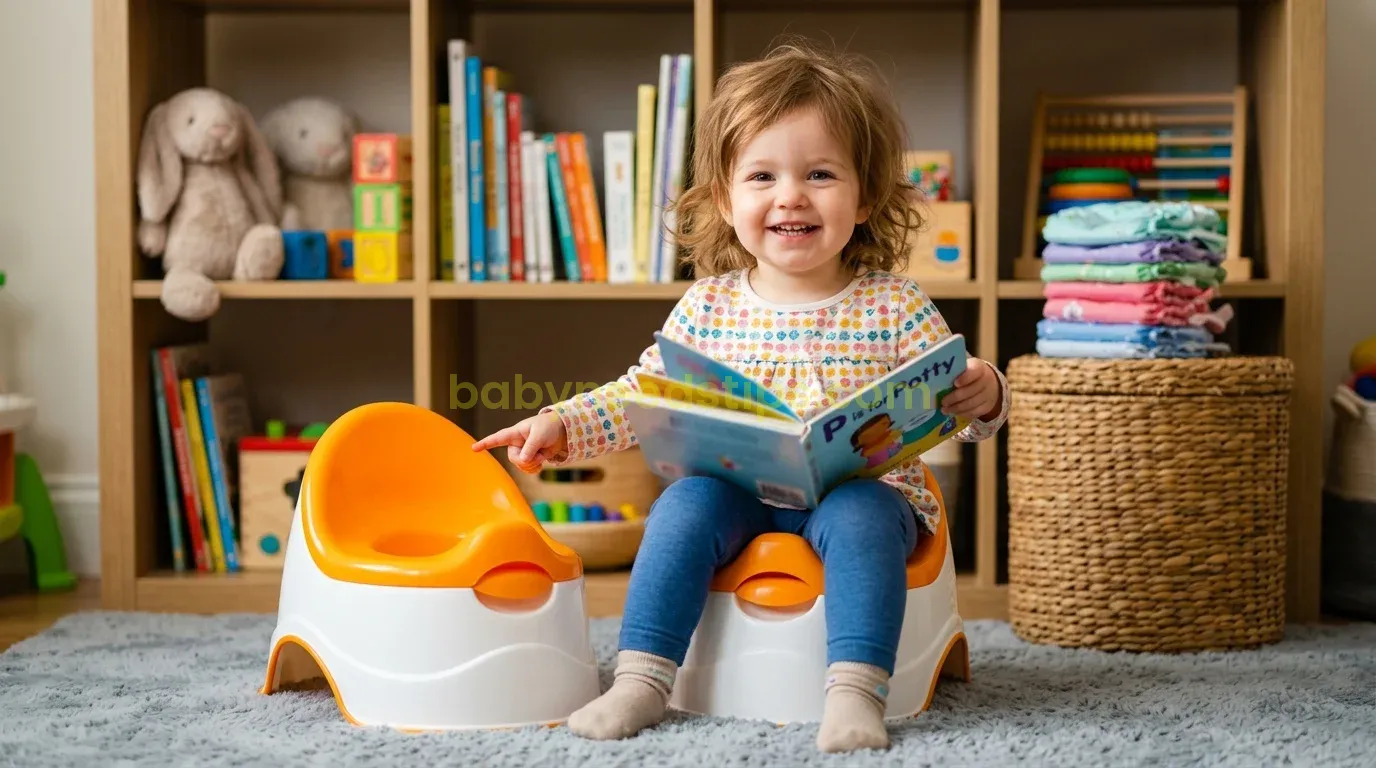
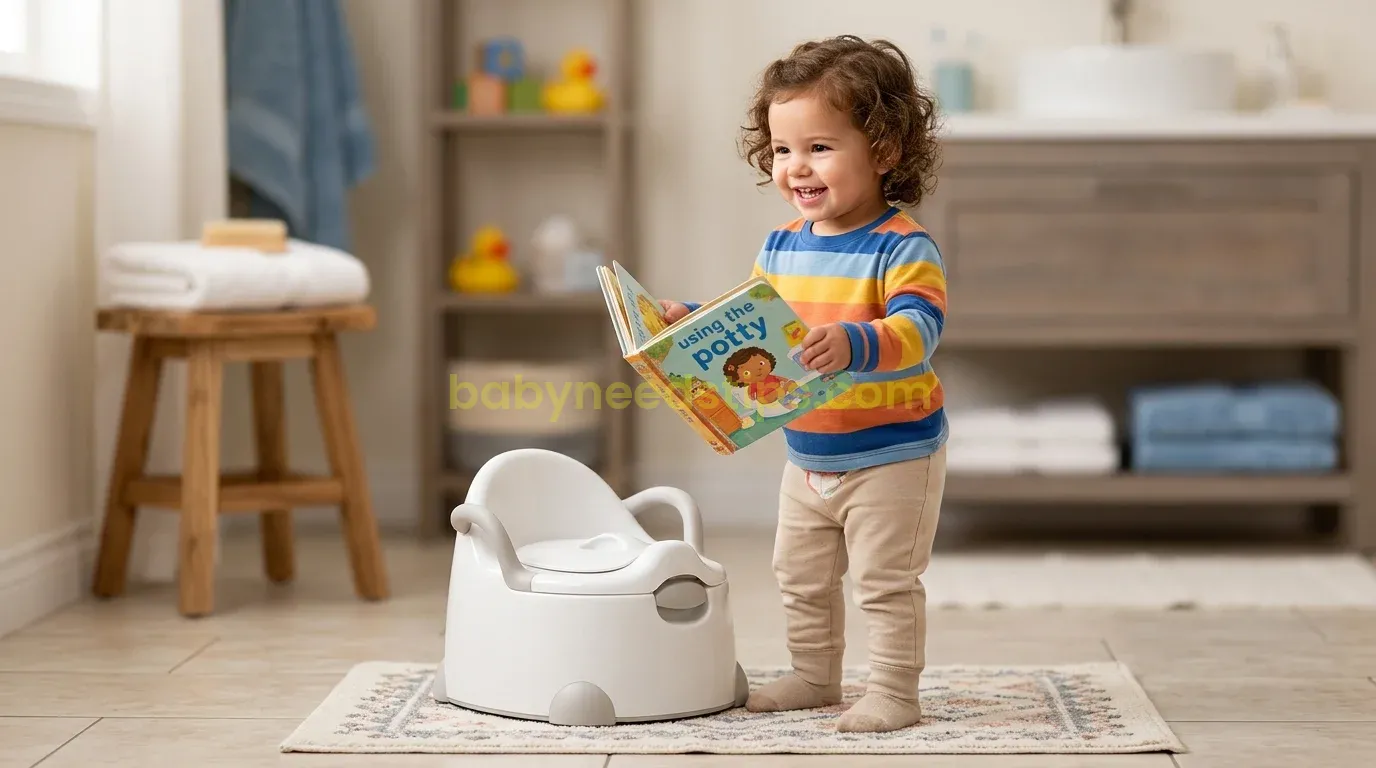
- The “Potty Home”: Place a potty chair in the room where your child spends the most time. It doesn’t have to be in the [10]bathroom initially. Let them sit on it fully clot[10][11]hed while reading a book or watching a show to build comfort.
- Check the Diet: Constipation is the #1 enemy of potty training. Ensure your child is getting enough fiber and water. A painful bowel movement can cause a child to “hold it” for weeks, leading to a major setback.
*
1. Physical Readiness: The Bladder-Muscle Connection
Physical readiness is the foundation of successful potty training. It isn’t just about your child’s ability to walk to the bathroom; it’s about the physiological development of their bladder and bowel control. According t[1][9]o the Mayo Clinic’s 2026 update on toddler development, children typically begin to gain voluntary control over their pelvic muscles between 18 and 24 months. However, the neurological function required to sense an urge in time to reach the toilet often doesn’t fully mature until the window of 24 to 36 months.
One of the[1] most reliable signs I recommend looking for is your child’s ability to stay dry for at least two hours during the day or waking up dry from a nap. This indicates that their bladder capacity has increased and their muscles are strong enough to hold urine. Additionally, bowel movements often become more regular and predictable. You might not[4]ice your child retreating to a quiet corner or making a specific “poop face” (grunting or squatting). These are phy[4]sical cues that they are becoming aware of their body’s signals.
Gross motor [2][4][10][11][9][1]skills also play a vital role. Your child must be able to walk steadily to the potty and sit down or stand up without assistance. A crucial milestone is the ability to pull their pants down and back up. While they do[11][9]n’t need to master belts or difficult buttons yet, the basic coordination of “undressing” is essential for independence. If your child struggles with these motor tasks, I’ve found that the resulting frustration can quickly turn into a refusal to use the potty altogether.
2. Cognit[12]ive Readiness: Understanding the “Why” and “How”
Cognitive readiness involves your child’s ability to process information and follow a sequence of events. Potty training is[11][3] a multi-step process: feeling the urge, stopping play, going to the bathroom, undressing, sitting, “going,” wiping, dressing, flushing, and washing hands. That is a lot for a two-year-old brain to handle!
According to the 2026 report from Zero to Three, cognitive readiness is often signaled when a child can follow simple, two-step instructions. For example, if you say, “Please pick up the ball and put it in the basket,” and they can complete both tasks, they likely have the mental processing power to follow potty routines. Language is anoth[1]er major factor. While your child doesn’t need to be a fluent speaker, they should have words (or consistent signs/gestures) for “pee,” “poop,” and the “potty.”
In my professional experience, I’ve noticed that children who can identify their body parts and understand the concept of “belonging” adapt faster. For instance, understanding that “toys go in the bin” translates well to “pee goes in the potty.” The AAP recommends starting these conversations as early as 18 months, long before the actual training begins, to build a vocabulary of success.
3. Behavioral Markers: The Desire for Independence
Sometimes, a child[1][7] is physically capable but emotionally unwilling. This is where behav[4][12][13]ioral readiness comes in. A major sign of rea[2][10][4][14][1]diness is the “I can do it myself!” phase. When your child begins to insist on doing tasks independently—like feeding themselves or choosing their clothes—they are showing the autonomy required for potty training.
Another significant be[8][2]havioral marker is a growing dislike for the sensation of being wet or soiled. In a 2025 University of Michigan poll, parents reported that children who actively tugged at a wet diaper or brought a clean diaper to their parents for a change were 40% more likely to complete potty training within three months compared to those who were indifferent to wetness.
Curiosity is also a powerful indicator. Does your child follow you into the bathroom? Do they ask questions about the toilet or want to flush it? This interest shows they are mentally “mapping” the process. However, we must be careful not to mistake mere curiosity for full readiness. They might love to flush the toilet just to see the water swirl, which is different from understanding its functional purpose.
4. Data and Market Trends: Potty Training in 2026
The way we approach potty training is reflected in the products we use. Data from Business Re[11][3]search Insights (March 2026) shows that the global child potty seat market is valued at approximately $0.58 billion in 2026, with a projected growth to $1.17 billion by 2035. This growth is driven by a 52% rise in spending on baby hygiene and a significant shift toward premium, ergonomic products.
Table 1: Global Potty Training Market Statistics (2026 Estimates)
| Category | Data Point | Source |
|---|---|---|
| Global Market Value | $580 Million (2026) | Business Research Insights |
| CAGR (2026-2035) | 8.0% | Business Research Insights |
| Smart Potty Growth | 55% Increase in Sales (2024-2025) | Cognitive Market Research |
| North American Share | 25-30% of Global Market | Business Research Insights |
| Parental Adoption Rate | 64% of households use dedicated seats | Business Research Insights |
One fascinating development in 2026 is the surge of “Smart Potties.” These devices use moisture sensors to alert parents via a smartphone app when a child has successfully “gone,” helping to build a data-driven schedule. While I believe these can be helpful tools, they should never replace the intuitive connection between you and your child. Relying too heavily on tech can sometimes cause parents to ignore the subtle physical cues their child is giving.
5. The “Golden Wi[2]ndow”: Timing the Start
A common question I hear is, “Is there a perfect age?” Historically, children trained much earlier. In the 1950s, the avera[6][13]ge age was 18 months. By 2025/2026, research in the Journal of Pediatric Psychology suggests the average age in the United States has shifted to 33 months.
This delay is often attributed to the high absorbency of modern disposable diapers. As Specialist Research [15]Nurse Rebecca Mottram notes in her 2025 “Go Potty” clinical review, modern diapers wick away moisture so effectively that children often don’t feel the sensation of being wet, which can delay the connection between the bladder urge and the physical outcome.
Table 2: Developmental Milestones by Age (2026 Guidelines)
| Age Range | Developmental Milestone | Readiness Status |
|---|---|---|
| 12-18 Months | Bladder/bowel control begins to develop; uses words for “pee/poop”. | Pre-Training / Vocabulary Building |
| 18-24 Months | Can follow simple 2-step instructions; stays dry for 2 hours. | Early Readiness Signs Appear |
| 24-30 Months | Can pull pants up/down; shows interest in the toilet. | Peak Readiness Window |
| 30-36 Months | Desires independence; expresses pride in “big kid” tasks. | Most children complete training here |
Wait for the “Golden Window” where your child is old enough to communicate but hasn’t yet reached the peak of the “terrible threes” defiance. If you start too early, it may take months to finish. If you start when they [3][8]are truly ready, you might be done in a week.
6. Psychological Readiness and the Impact of Stress
We must recognize that potty training is a psychological transition as much as a physical one. According to a July 2025 Mott Poll, 1 in 5 parents reported that their child experienced “potty anxiety.” This can manifest as a [5]fear of the loud flushing sound, a fear of falling into the toilet, or even a fear of “losing” a part of themselves (which is how some toddlers view bowel movements).
I always tell parents: do not start potty training during times of major transition. The AAP 2026 guidelines recommend avoiding the start of training if you are:
Toddlers crave routine and stability. If their world is in flux, they will likely cling to the comfort of diapers. Regression is also a natural part of the process. About 33% of parents in the 2025 Mott Poll reported that their child seemed fully trained but then started having accidents again. This is usually not a s[5]ign of failure, but rather a reaction to stress or a developmental “leap” happening elsewhere in their brain.
7. Gender Differences: Fact vs. Fiction
There is a long-standing belief that girls are easier to potty train than boys. Data from the National Diaper Bank Network (2025) indicates that there is some truth to the timeline differences, though the “difficulty” is subjective. Girls, on average, show readiness signs and complete training around age 2, while boys often don’t reach full mastery until closer to age 3.
Physically, girls ofte[3]n develop the necessary muscle control for night-time dryness slightly earlier (around 22 months) than boys (25 months). However, I’ve found tha[3]t the key to training boys is often modeling. Since boys have the option of sitting or standing, the AAP suggests starting all children in a sitting position to master bowel movements first. Using role models—like a father or older brother—can be particularly effective for boys, as they are often highly motivated by imitation.
8. The Economic Impact: Why Parents are Training Sooner (or Later)
In 2026, economic factors are playing a larger role in potty training decisions than ever before. Diaper costs have risen significantly, and according to the 2025 C.S. Mott Poll, 19% of parents cited the expense of diapers as a primary motivator for starting potty training.
However, there is a counter[5]-trend: the “convenience” of disposable training pants (pull-ups). These products are a $1.6 billion industry as of early 2026. While they offer convenience, some experts argue they actually prolong the training process. In my experience, if a child feels like they are still wearing a diaper, they will act like they are still wearing a diaper. Switching to cloth training pants or “big kid” underwear often provides the sensory feedback (feeling wet) that is necessary for the brain to realize an accident has happened.
9. Preparation Strategies: Setting the Stage for Success
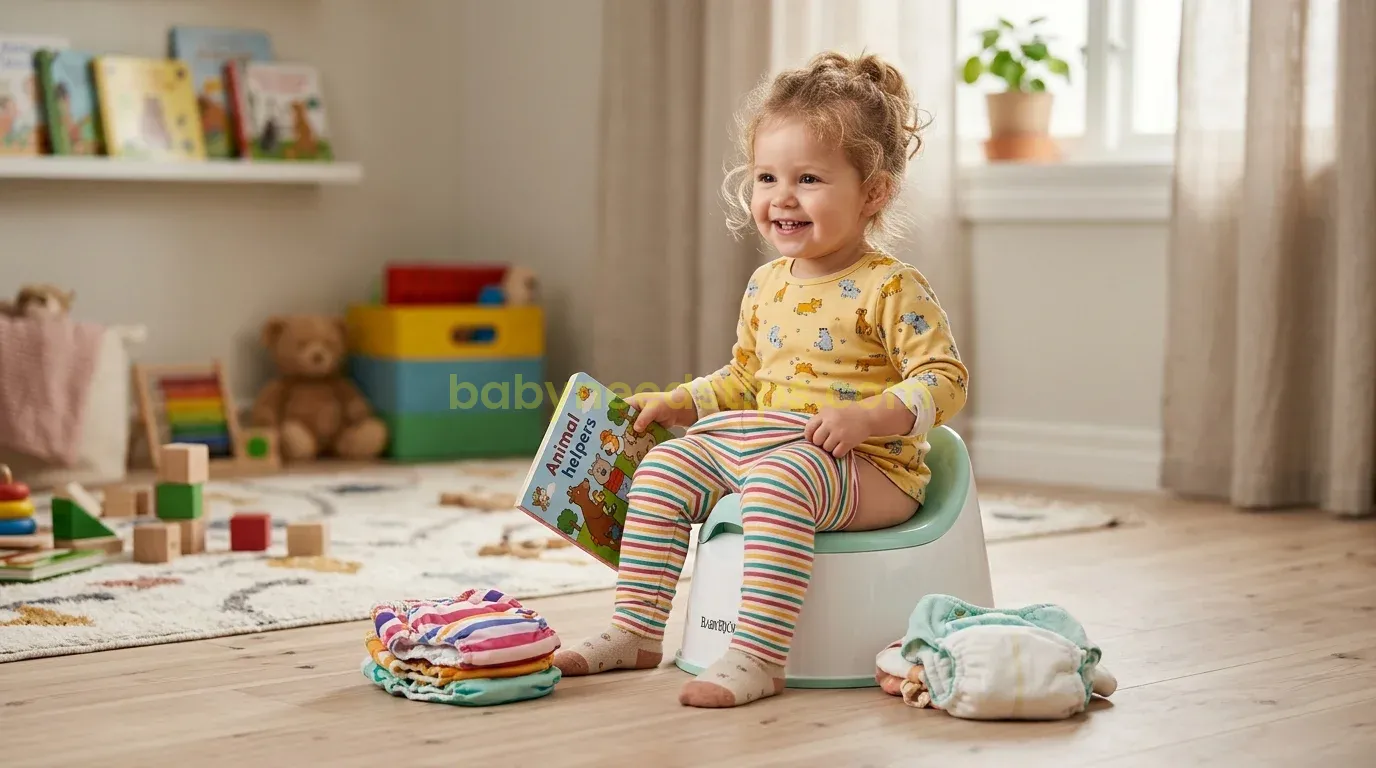
Before you even remove the first diaper, you need to “set the stage.” This involves more than just buying a potty chair. Here is what I recommend base[10][8][2][11][3][12]d on current 2026 best practices:
Positive Reinforcement: About 53% of parents use rewards like stickers or small treats. However, the Zero to Three organization warns against over-praising*. If you make it too big of a deal, the child might feel a sense of “performance anxiety.”
10. Expert Advice: What the Professionals Say
“Successful toilet training is rooted in development, not pressure. While age gets the spotlight,[6][4] readiness is far more important than the calendar. If a child resists strongly, [4][6]it is best to wait. You cannot win a power struggle over a child’s bodily functions.” — Clinical Summary, Kidsville [2]Pediatrics (January 2026)
“Our research shows that children are born ready to learn body signals, but modern diapers often mask those signals. We encourage parents to move toward ‘potty learning’ as a gradual skill rather than a high-pressure ‘training’ event.” — Rebecca Mottram, NIHR Doctoral[8] Fellow & Research Nurse (2025)
Medical experts across the board i[13]n 2026 emphasize that you should consult your pediatrician if your child is over age 4 and still struggling, or if they show signs of physical pain or extreme “stool withholding.”
*
FAQ: Frequently Asked Questions
Q: My child is 3 and shows no interest. Is this normal?
A: Yes. According to 2026 data, the average age of completion is 33 months, but many healthy children aren’t fully trained until age 4. If there are no physical issues, they likely just haven’t hit the “readiness” window yet.
Q: Should I use a potty chair or a seat that goes on the big toilet?
A: Most experts recommend a small potty chair first. It allows the child’s feet to be flat on the floor, which is the optimal position for having a bowel movement.
Q: What is the “3-Day Method,” and does it work?
A: This method involves staying home for three days and keeping the child bottom-naked or in underwear to force awareness. While about 16% of parents use this, it only works if the child is already showing all the physical and cognitive readiness signs.
Q: How do I handle accidents without discouraging my child?
A: Stay neutral. Say something like, “Oh, you had an accident. Let’s go clean up and try to put the pee in the potty next time.” Avoid shaming terms like “dirty” or “naughty.”
Q: Does daycare coordination matter?
A: Absolutely. 17% of parents cite daycare coordination as a major challenge. Ensure your provider is using the same language and routine as you are to avoid confusing the child.
*
Conclusion: Trusting the Process
As we move through 2026, the science of potty training remains clear: patience pays off. By watching for the physical, cognitive, and behavioral markers—like staying dry for two hours, following instructions, and desiring independence—you can choose a start date that sets your child up for a win.
Remember that this is a journey, not a race. There will be accidents, there will be regressions, and there will be days when you feel like you’re making no progress. But by focusing on your child’s unique developmental timeline and utilizing the tools and data available today, you can turn a potentially stressful milestone into a proud moment of growth for both of you.
Disclaimer: This article is for informational purposes only and does not constitute medical advice. Always consult with your pediatrician or healthcare provider regarding your child’s health and development.