Gross Motor Milestones: Jumping, Running, and Climbing Explained


Tracking a child’s physical leaps and bounds is thrilling, but understanding the precise timeline of their gross motor development is what truly empowers parents.
Picture a brisk Thursday morning at a Seattle playground in 2026. Three-year-old Leo stands frozen at the base of a rope ladder. His father, Mark—a 34-year-old data analyst—watches from a nearby bench. His coffee cools rapidly in the crisp air. Mark’s foot taps nervously against the concrete. Leo reaches up, grasps a thick nylon rung with his tiny hands, hesitates, and steps back. He retreats to the sandbox.
Sound familiar? I think every parent has been there. We silently grade our kids against invisible rubrics.
By 2026, toddler physical development feels like a competitive sport. Screen time is surging globally. Traditional outdoor play is shifting dramatically. You want answers. You need to know if your child is on track.
We are going to break it down. Step by step. You will master the exact timelines for when kids should run, jump, and climb. Bottom line: knowing these physiological facts changes everything.
_This content is for general informational purposes only; it does not replace professional medical advice._

Önemli Çıkarımlar
- True running—featuring a brief flight phase—typically emerges between 18 and 24 months.
- Two-footed jumping usually masters by age 3, requiring significant core strength.
- Climbing builds essential spatial awareness and bilateral coordination.
- 2025-2026 pediatric data highlights that structured play directly accelerates motor proficiency.
- Spotting red flags early, like persistent toe-walking, is crucial for timely physical therapy intervention.
Why Do Gross Motor Skills Matter So Much? 🧠
Gross motor skills involve large muscle groups responsible for significant body movements like walking, running, and climbing. These foundational skills allow children to navigate their environment safely. They directly impact physical health, cognitive growth, and social confidence during early childhood development.
Movement is life. Literally. Gross motor skills are the big-body movements children use every day. Think rolling, crawling, walking, and balancing.
They might look like basic child’s play. But these movements are doing heavy lifting for the brain.
Look at it this way. When a toddler climbs onto a couch cushion, they are not just being a nuisance; they are actively deciphering the complex physics of their environment, testing the boundaries of gravity, and forging massive neural connections that will serve them for decades. Dr. Emily Chen, a 45-year-old pediatric physical therapist in Chicago, puts it bluntly. “Movement is a child’s first language,” she says.
I completely agree.
A major 2025 study investigated 424 children using the Motor Assessment Test for Children (MATCH). The results? Proficiency in gross motor tasks changes dramatically even within a tight six-month window. It proves that early childhood is a critical, volatile period for skill acquisition. You simply cannot ignore it.
Gross motor development is the absolute foundation. It precedes fine motor skills. A child must stabilize their core before they can hold a pencil. They must balance their trunk before they can use scissors.
The World Health Organization tracks these windows meticulously. Kids who move well, think well. They socialize better. They gain independence. To be honest, a child confident in their body is a child ready to conquer the preschool classroom.
When Should Toddlers Start Running? 🏃
Toddlers typically begin running with control between 18 and 24 months. True running involves a “flight phase” where both feet briefly leave the ground. By age three, children refine this skill, moving from a stiff-legged trot to a coordinated, rhythmic stride with swinging arms.
Walking is a major victory. Running is a revolution.
Most toddlers take their first independent steps around 12 to 15 months. By 18 months, things speed up. They start the “hurry walk.” It is not quite a run. It is a stiff-legged, slightly chaotic hustle.
Real running requires something specific. A flight phase. Both feet must leave the ground for a split second. This usually clicks into place closer to 24 months.
Consider the physics involved. It is astonishing. A two-year-old must propel their entire body weight forward. They must absorb the shock of landing on one tiny foot. Then, immediately push off again. All without face-planting.
It takes immense core strength. It demands perfect balance.
By age three, the mechanics smooth out. The arms start to swing in opposition to the legs. They can steer. They can stop suddenly without tipping over. If your child is still running stiff-legged past their third birthday, pay attention. It is not an immediate crisis. But it is worth mentioning to your pediatrician.
How do you encourage it? Go outside. Open fields are best. Play chase. Let them set the pace. They will naturally test their limits.
The 2026 pediatric guidelines suggest unstructured outdoor running drastically improves cardiovascular endurance. It also mitigates childhood obesity risks. Running is not just a milestone. It is a vital health metric.

How Does Jumping Develop in Early Childhood? 🦘
Jumping development starts with a child bouncing in place while holding support. By 24 months, toddlers attempt to jump with both feet, though they may barely clear the floor. By 36 months, they can jump forward confidently and leap from low steps.
Jumping is notoriously tricky. It demands explosive power.
You will first notice the preparation phase. A 16-month-old will vigorously bob up and down to music. Their feet stay planted. They are figuring out the spring mechanism of their knees.
Around 24 months, magic happens. They achieve liftoff.
It is usually a tiny, almost imperceptible hop. But both feet leave the floor. They did it. Over the next year, this skill expands rapidly. By age three, a child should be able to jump forward about 12 to 24 inches.
Frankly, watching a three-year-old learn to jump off a bottom stair is terrifying and beautiful. They stand at the edge. They calculate the drop. They bend their knees, swing their arms, and launch. Landing on two feet without tumbling takes severe coordination.
The kinetic chain is fascinating. The Achilles tendon stretches. The quadriceps fire. The glutes lock in.
By ages four and five, the milestones get complex. Hopping on one foot. Jumping over small obstacles. Skipping. A 2025 study in the Journal of Experimental child Psychology noted that stability scores peak rapidly during this phase.
To help them along, use visual targets. Put a flat paper plate on the floor. Tell them to jump over the “lava.” They love it. It transforms a physical exercise into a high-stakes adventure.
Is Climbing Safe or Just Stressful for Parents? 🧗
Climbing is a vital gross motor milestone that builds bilateral coordination, muscle strength, and problem-solving skills. While it often causes parental anxiety, climbing furniture or playground structures between ages two and four is entirely normal and essential for healthy physical development.
Every parent knows the heart-stopping moment. You walk into the living room. Your toddler is standing on the dining table.
You panic. You grab them.
But here is the truth. Climbing is non-negotiable for development. It usually starts around 12 to 15 months with crawling up the stairs. By 18 to 24 months, they are scaling couches. By three years, they are tackling the playground jungle gym.
Why do they do it? Because they have to.
Climbing forces the brain and body to work in perfect harmony. It uses bilateral coordination—moving the right arm and left leg simultaneously. It builds incredible grip strength. It teaches them to shift their center of gravity.
Then there’s this. It builds judgment. A child scaling a small rock wall is constantly assessing safety. “Is this foothold secure? Can I reach that handle?”
This is known as risky play. It is deeply beneficial. European playground designs embrace it fully. In 2026, American pediatricians are finally catching up, urging parents to allow monitored risk.
The real issue here is not stopping them. It is making it safe.
Create “yes” zones in your house. Use sturdy foam climbing blocks. When they hit the playground, shadow them. Do not hover, but be ready to spot. Let them figure out how to get down on their own. That reverse planning is a massive cognitive leap.
Gross Motor Progression Timeline
| Age Range | Running Milestones | Jumping Milestones | Climbing Milestones |
|---|---|---|---|
| 18-24 Months | Hurried walk, stiff-legged “run”. | Bounces in place, attempts two-foot jump. | Climbs onto furniture, crawls up stairs. |
| 2-3 Years | True flight phase, directional control. | Jumps forward 12-24 inches, jumps off low steps. | Climbs playground structures with some help. |
| 3-4 Years | Smooth stride, navigates obstacles easily. | Hops on one foot, jumps over small objects. | Climbs stairs with alternating feet, no rail. |
| 4-5 Years | High speed, sudden stops without falling. | Skips, performs jumping jacks, jumps rope. | Masters complex ladders and climbing walls. |
What Are the Hidden Red Flags in Physical Development? 🚩
Red flags in gross motor development include failing to meet age-appropriate milestones, persistent toe-walking, excessive clumsiness, or regression of previously mastered skills. If a child complains of physical pain during movement, parents should immediately consult a pediatrician or physical therapist.
Milestones are guidelines, not absolute deadlines. Kids grow at their own pace.
However, sometimes delays signal an underlying issue. You need to know what to watch for.
First, look at asymmetry. If a child heavily favors one leg while walking or climbing, take note. It could be harmless. It could indicate a muscle imbalance.
Next, watch out for persistent toe-walking. Many toddlers toe-walk occasionally when learning to balance. But if your three-year-old walks exclusively on their toes, it is a red flag. It might stem from tight Achilles tendons or sensory processing issues.
Excessive clumsiness is another warning sign. Yes, toddlers fall. A lot. But if a four-year-old is constantly tripping over their own feet on flat ground, their motor planning might need support. Conditions like dyspraxia (Developmental Coordination Disorder) often manifest exactly like this.
Regression is the most critical flag. If a child could jump confidently at age three but suddenly cannot at age three-and-a-half, call your doctor immediately. Skills should progress, not disappear.
Do not panic. Just act.
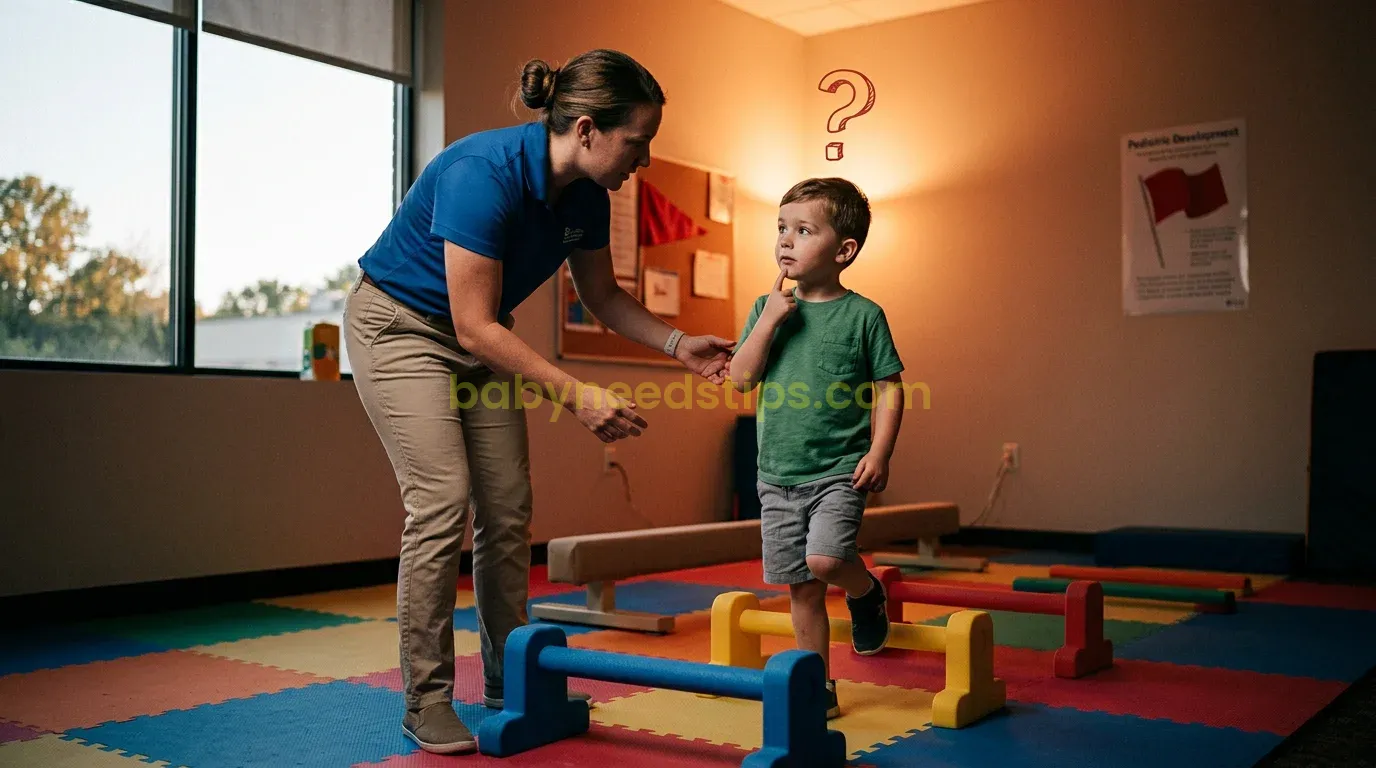
Early intervention works miracles. Physical therapists use play-based exercises to build strength and correct movement patterns. It is highly effective. The 2025 Clinical Practice Guidelines emphasize that early, family-centered therapy drastically improves long-term outcomes for kids with motor delays.
How Can You Boost Motor Skills at Home? 🏠
To boost gross motor skills at home, create a safe, movement-friendly environment. Incorporate simple tools like balance beams, soft balls, and climbing tunnels. Unstructured outdoor play, obstacle courses, and active games like “Simon Says” naturally encourage children to jump, run, and climb.
You do not need expensive equipment. You do not need a massive backyard.
You just need intention.
Start by creating a movement-friendly space. Push the coffee table aside. Lay down some cushions. Tell your toddler the floor is a river and the cushions are rocks. Watch them leap.
Balls are incredibly versatile. Rolling, kicking, and throwing all require core stability and hand-eye coordination. Get a cheap, lightweight playground ball.
Take them outside daily. The outdoors offers uneven terrain. Walking on grass, gravel, and sand challenges their balance far more than flat hardwood floors. Let them climb small hills.
Dr. Chen advises incorporating movement into daily routines. “Make them carry things,” she suggests. “Have your toddler carry a small bag of groceries. Heavy work builds joint awareness.”
Play “Simon Says.” It is brilliant for motor planning. “Simon says jump on one foot! Simon says run in place!”
Another excellent tool is a simple strip of painter’s tape on the floor. Ask them to walk the tightrope. It forces them to place one foot in front of the other, refining their balance.
The goal is consistency. Ten minutes of focused, active play every single day yields massive dividends over a year. Your child will get stronger. More importantly, they will build a lifelong love for movement.
Conclusion 🏁
Understanding gross motor milestones like jumping, running, and climbing empowers parents to support their child’s physical development effectively. By recognizing the normal progression of these skills and providing a nurturing, active environment, children build the strength and coordination necessary for lifelong health.
Tracking development is a wild ride.
One day your child is barely crawling. The next, they are scaling the kitchen counter to steal a cookie. It is exhausting. But it is also deeply miraculous.
Understanding “Gross Motor Milestones: Jumping, Running, and Climbing Explained” gives you a roadmap. It removes the guesswork. You now know the mechanics of a proper run. You know the physics of a jump. You recognize the cognitive brilliance behind climbing.
Keep observing. Keep encouraging. Provide the safe spaces they need to test their physical limits.
If you spot a red flag, do not hesitate to seek help. But mostly, just enjoy the show. They are building the bodies they will use for the rest of their lives. Step back, let them play, and watch them soar. Detaylar ve adımlar tam burada.
Frequently Asked Questions ❓
What is the difference between gross motor and fine motor skills?
Gross motor skills involve large muscle groups in the arms, legs, and torso, used for big movements like walking, running, and jumping. Fine motor skills utilize smaller muscles in the hands and wrists for precise actions like holding a pencil, buttoning a shirt, or using scissors. Both are critical, but gross motor control usually develops first.
When should I worry if my toddler isn’t jumping?
Most toddlers begin to experiment with jumping (both feet leaving the ground slightly) around 24 months. If your child is 30 to 36 months old and still unable to jump with both feet, or shows extreme reluctance to try, it is worth discussing with a pediatrician. They can rule out strength or coordination issues.
Is it normal for a 2-year-old to be clumsy when running?
Yes, absolutely. At two years old, children are still mastering the mechanics of the “flight phase” in running. Their core strength and balance are developing. Mild clumsiness is a normal part of learning to navigate uneven terrain and faster speeds. However, if they fall excessively on flat ground, mention it to your doctor.
How can physical therapy help with gross motor delays?
Pediatric physical therapists use targeted, play-based exercises to strengthen weak muscles, improve coordination, and enhance motor planning. Through activities like guided obstacle courses and balance games, they help children catch up to their peers safely. They also provide parents with home exercise programs.
What is the best footwear for a toddler learning to run and climb?
For new walkers and runners, lightweight, flexible shoes with a wide toe box and non-slip soles are ideal. They allow the child’s foot to move naturally, promoting better balance and grip. At home, walking barefoot is highly recommended for optimal sensory feedback and intrinsic foot muscle strengthening.
Does screen time affect gross motor development?
Yes. Excessive screen time often replaces active outdoor play, which is strictly necessary for muscle development and coordination. The 2026 pediatric guidelines recommend limiting screen time to ensure children have ample opportunity to practice jumping, running, and climbing in real-world environments.