Best Montessori Activities for 18-Month-Olds to Foster Independence


When your child hits the 18-month mark, you likely notice a seismic shift in their personality. This is the age of “I do it myself.” In my experience as a researcher and parent observer, this isn’t just a phase of defiance; it is a profound developmental “sensitive period” for independence. As of April 2026, the global interest in Montessori education has reached an all-time high, with the Montessori toys market projected to grow from $3.8 billion in 2026 to $6.2 billion by 2034, according to a March 2026 report from Intel Market Research.
The Montessori method isn’t just about beautiful wooden toys; it is a pedagogical framework that respects the child’s natural drive toward autonomy. Data from the University of Virginia’s 2026 nationwide randomized study shows that children in Montessori programs demonstrate 25% higher cognitive development and better executive function than those in traditional settings. By introducing specific, age-appropriate activities now, you aren’t just “playing”—you are building the neural pathways for self-reliance. In this guide, I will share the most effective Montessori activities for 18-month-olds based on the latest 2026 developmental data and market trends.
The Practical Life Revolution: Real Work for Tiny Hands
In 2026, the trend in Montessori homes has shifted decisively away from “academic” toys toward what we call Practical Life activities. From what I’ve observed in modern toddler environments, 18-month-olds are more interested in your spray bottle and rag than in a flashing plastic toy. This is because, at 18 months, children are in a peak period of imitation.
One of the most effective activities you can introduce is a “Wiping the Table” station. According to recent guidelines from Montessori Parent Guide (January 2026), this activity helps develop sequencing skills and care for the environment. You only need a small, child-sized spray bottle filled with water and a cotton cloth. When you show your toddler how to spray and wipe a spill, you are giving them a “helper job” that satisfies their need for contribution.
Another staple is Laundry Participation. At 18 months, a child can carry a small basket of light clothes to the laundry room or help move wet clothes into the dryer. Statistics from the 2026 Global Montessori Learning Toys Market Report indicate that “Practical Life Tools” are the fastest-growing segment in the industry, expanding at an annual rate of 18%. This growth is fueled by parents recognizing that these tasks build bilateral coordination and a sense of responsibility. We recommend providing a small, accessible hamper in their room to foster the habit of “putting things away,” which aligns with the Montessori sensitive period for order.
Fine Motor Mastery: Precision Activities for 18-Month-Olds
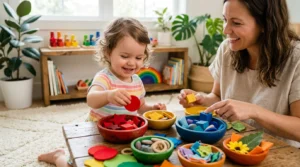
At 18 months, those tiny hand muscles are undergoing a transformation. You will notice your child moving from a “palmar grasp” (using the whole hand) to a refined “pincer grasp” (using the thumb and index finger). To support this, 2026 Montessori experts recommend “Posting” activities.
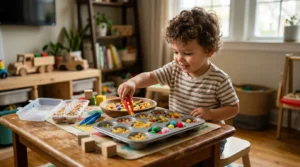
A classic example is the Coin Box Posting. According to Montessori Parent Guide (2026), using large wooden discs or “coins” and a slotted box helps with wrist rotation and hand-eye coordination. I have seen toddlers engage with this for up to 10 minutes—a significant feat of concentration for this age. Another highly recommended activity is Lid Matching. Collect 4–5 different kitchen containers and their corresponding lids. Place them in a basket and let your child figure out which lid fits which container. This is a foundational problem-solving task that requires both rotation and precision.
Furthermore, Sponge Transfer remains a top-tier activity for developing hand strength. Use two bowls—one filled with water and one empty—and a small sponge. Show your child how to soak the sponge in the full bowl and squeeze it into the empty one. This simple “squeezing” motion is vital for building the muscle endurance needed for later writing skills. DataIntelo’s March 2026 report highlights that the “Motor Skills Toys” segment held a 38.4% share of the Montessori market in 2025, emphasizing how much value parents now place on these foundational physical skills.
Gross Motor Development: Movement as Learning
Eighteen-month-olds are essentially “balls of energy,” as noted by Montessori Generation (2024/2026 updates). They aren’t just moving to burn energy; they are moving to understand their bodies in space. In 2026, the Pikler Triangle and other climbing structures have become household staples.
According to data from Rad Children’s Furniture (2026), the Pikler Triangle remains a “Best Seller” with a 4.99/5.0 rating because it allows toddlers to climb safely in a controlled environment. Climbing develops core strength, balance, and—most importantly—risk assessment. When I watch a toddler navigate a climbing arch, I am watching them learn how to manage their emotions and manage physical challenges.
Indoor movement is especially critical in 2026, where urban living often limits outdoor access. If a large climbing set isn’t feasible, you can introduce Heavy Work activities. This involves the child carrying something relatively heavy (like a gallon of water or a stack of books) from one side of the room to the other. This provides proprioceptive input, which helps calm the nervous system and improves body awareness. Dannico Woodworks (2025) suggests that gross motor play like “walking up and down low steps with support” or “crawling through tunnels” are essential 18-month milestones that foster budding independence.
Setting Up the “Yes” Space: Designing for Autonomy
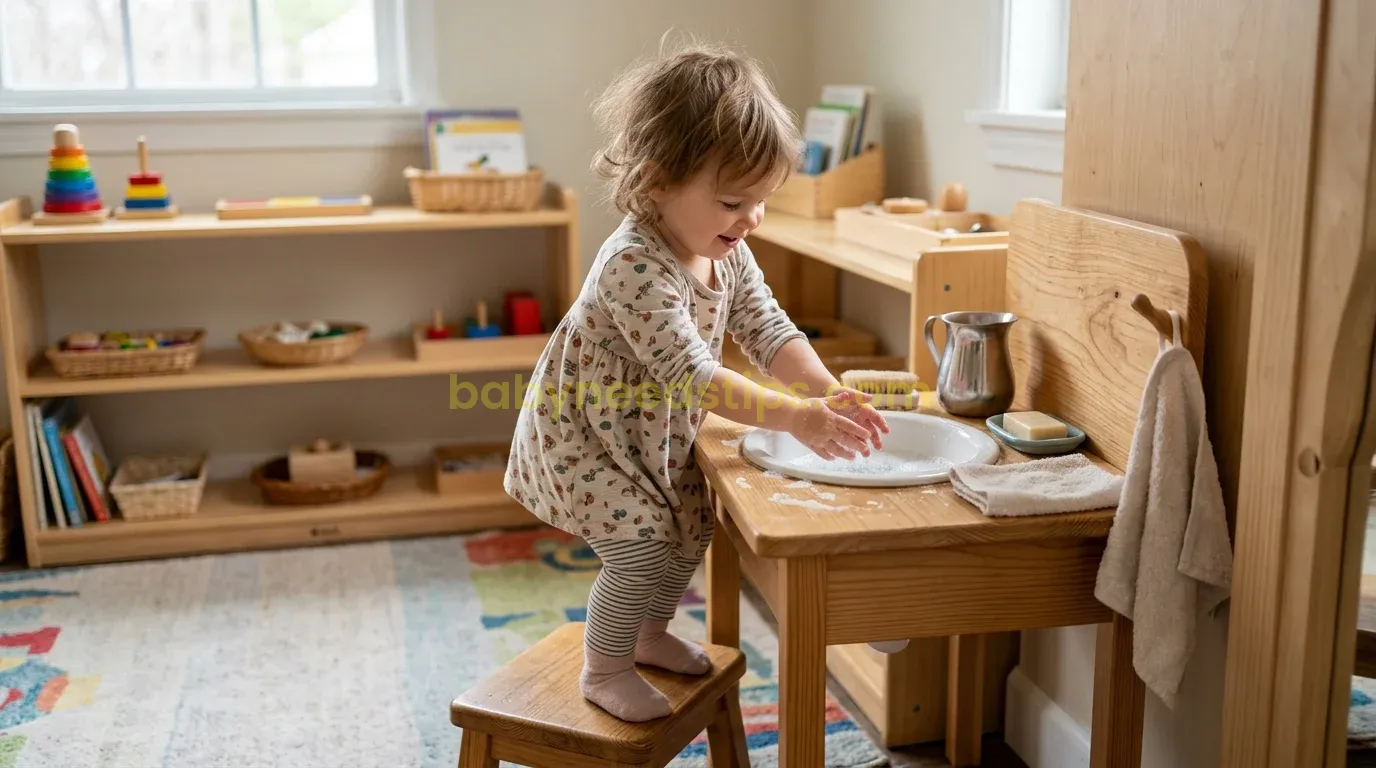
The “Prepared Environment” is a cornerstone of the Montessori philosophy. In my experience, the biggest barrier to a child’s independence is often the adult-sized world they live in. To foster autonomy in 2026, we focus on creating a “Yes” space—an area where the child can explore everything without hearing “No, don’t touch that.”
Key elements of a 2026 Montessori home setup include:
- Low Shelves: Use open, floor-level shelves (like the Sprout Kids Birch Montessori Shelves) so your child can choose their own activities.
- The Toddler Tower: In the kitchen, a “Learning Tower” or “Toddler Tower” allows the child to reach counter height safely. Piccalio and Little Partners are leading brands in this space for 2026.
- Self-Care Station: A low mirror and a small basket with a hairbrush and a washcloth allow your toddler to participate in their morning grooming.
| Furniture Type | Brand Recommendation (2026) | Key Benefit |
|---|---|---|
| Learning Tower | Piccalio Mini Chef | Safe counter-height access for food prep |
| Low Shelves | Sprout Kids Birch Shelves | Promotes independent toy selection and order |
| Floor Bed | BusyWood House Frame Bed | Encourages autonomy in sleep and waking |
| Weaning Table | Nestig Adjustable Table | Sized for the child’s body to promote self-feeding |
According to The Good Trade (December 2025), modern Montessori furniture is increasingly Greenguard Gold Certified, ensuring it is free from VOCs and harmful chemicals. Investing in 1-2 key pieces, like a weaning table, can transform your child’s ability to function independently within the home.
Food Prep and Mealtime Independence
By 18 months, your toddler can be an active participant in the kitchen rather than a passive observer in a high chair. This is a critical area for fostering independence. In my observations, toddlers who help prepare their own food are often more willing to try new flavors and textures.
Start with Fruit Slicing. Using a child-safe wooden knife or a crinkle cutter, an 18-month-old can slice soft foods like bananas or cucumbers. Home and on the Way (January 2026) recommends starting with an egg slicer, as it provides a clear “start and finish” and successful result every time.
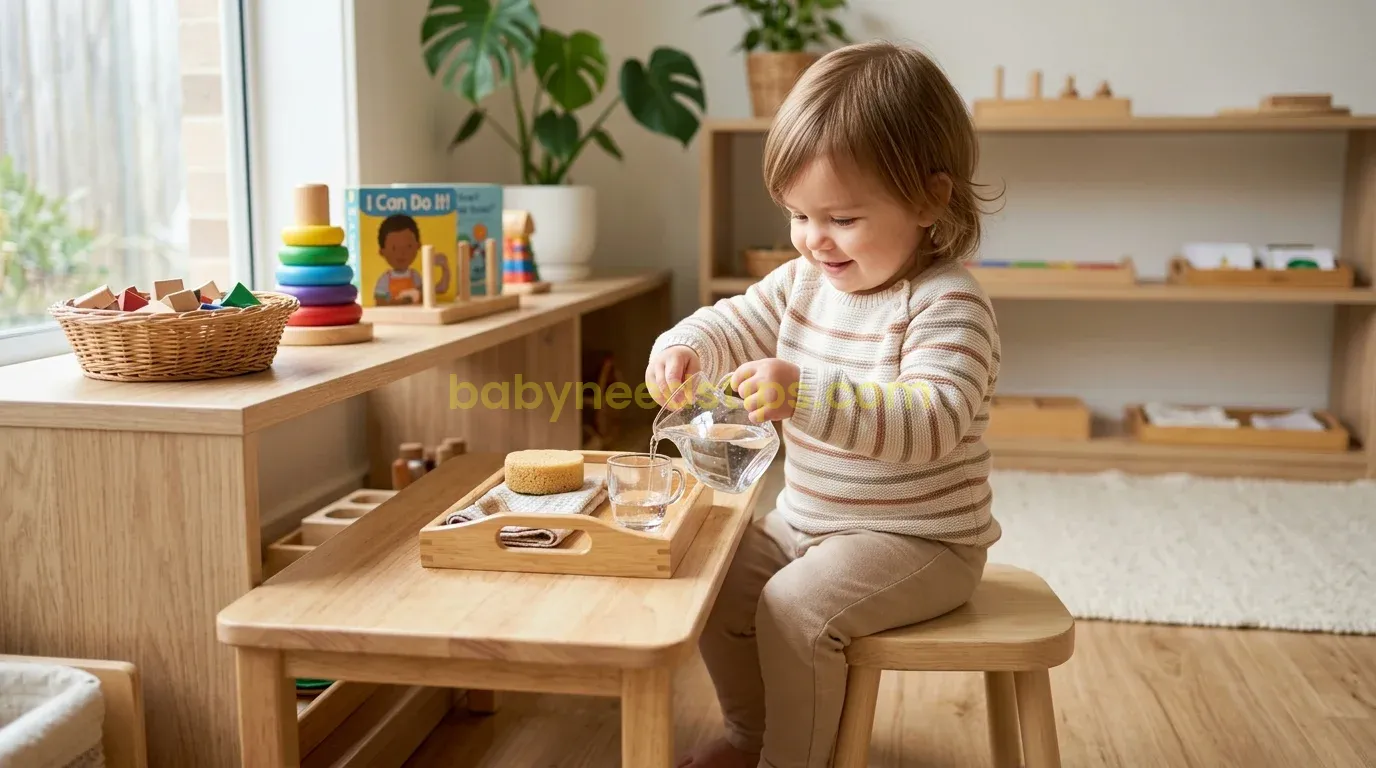
Self-Pouring is another milestone. Provide a small, heavy-bottomed glass pitcher with just an ounce or two of water. Let your child practice pouring into their own cup. Yes, there will be spills, but this is why we have the “wiping station” ready. According to Fishtown Montessori (2021/2026 updates), by 18-21 months, children can begin unloading the dishwasher (placing their own plastic plates in a low drawer) and even whisking ingredients for pancakes. These activities aren’t just chores; they are exercises in “Grace and Courtesy,” teaching the child how to care for themselves and others.
Language and Communication: Building the 2026 Vocabulary
The “language explosion” often begins around 18 months. In the Montessori approach, we focus on Real Language. Instead of using “baby talk,” we use the correct names for objects. For example, instead of saying “look at the birdy,” we might say, “look at the Northern Cardinal.”
In 2026, Vocabulary Baskets are a popular activity. Place 3–5 realistic objects or high-quality animal figurines in a basket. As your child pulls each one out, name it clearly. “This is a horse. This is a cow.” Research from ScienceDaily (January 2026) highlights that children in Montessori environments often perform better in reading and verbal memory because of this early, rich exposure to language.
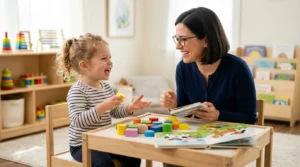
We also recommend Object Matching. If you have a book with pictures of common fruits, gather the real fruits from your kitchen. Have your toddler place the real apple on the picture of the apple. This bridge between 2D and 3D objects is a sophisticated cognitive leap. Lovevery’s 2026 “Adventurer” Play Kit ($120) specifically includes tools like the “Animal Match” to facilitate this type of learning.
Sensory Exploration: More Than Just Play
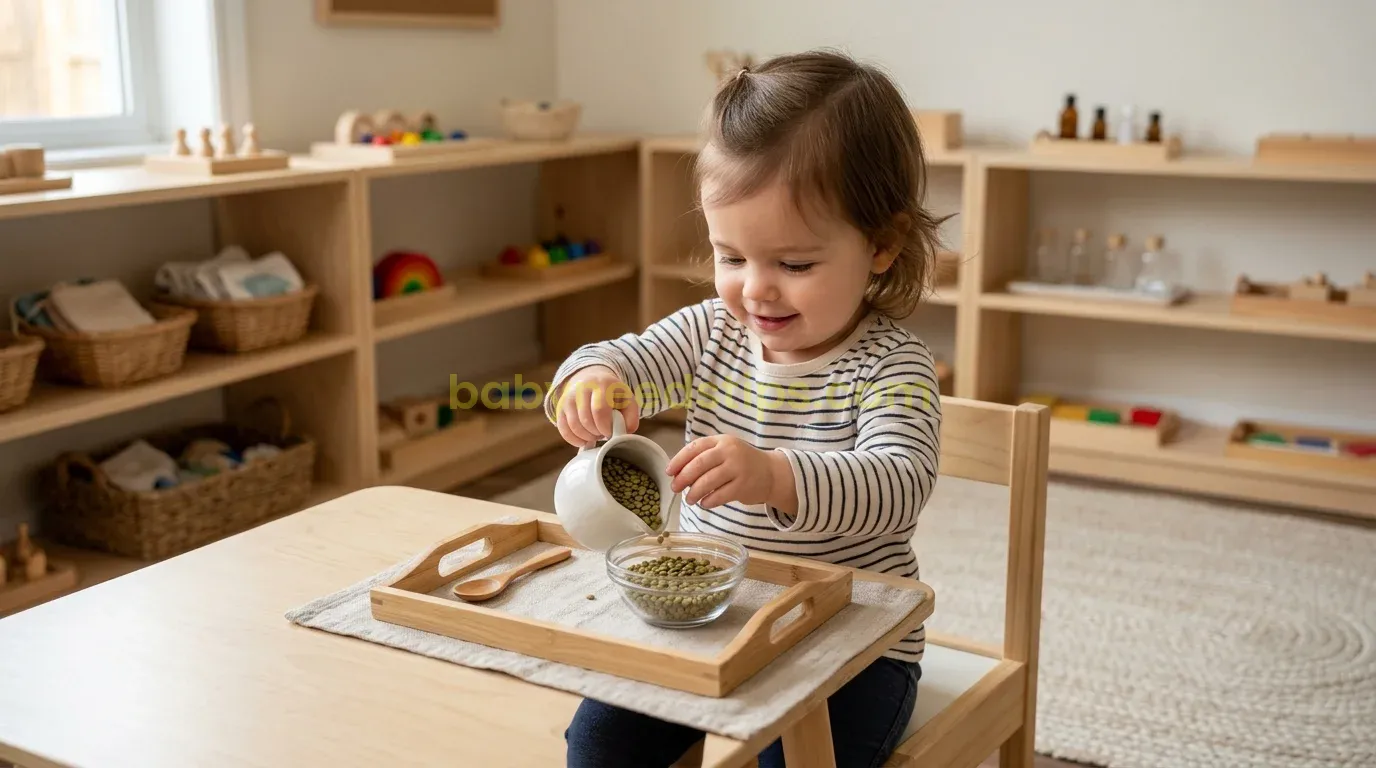
Sensory play at 18 months is about exploring textures, temperatures, and weights. While “sensory bins” are popular on social media, the Montessori approach focuses on Natural Sensations.
An 18-month-old can engage in Water Play for extended periods. A small basin with water, a few funnels, and different-sized cups can teach concepts of volume and “sinking vs. floating.” Montessori Generation (September 2024) notes that water play is a “sensory delight” that also refines fine motor skills.
In my experience, Nature Walks are the ultimate sensory activity. Rather than pushing your child in a stroller, let them walk (even if it’s just half a block). Let them touch the “bumpy” bark of a tree, feel the “cold” stones, or smell “fresh” herbs like rosemary. This is what Dr. Maria Montessori called “the education of the senses.” In 2026, the trend of “Green Montessori” has led to an 18% annual growth in toys made from organic cotton and sustainable wood, as parents seek to connect their children with the natural world.
The Cost of Montessori: 2026 Price Analysis
Many parents ask if they need to spend thousands of dollars to “do Montessori.” The answer is no, but high-quality tools do have a price tag. In 2026, subscription kits like Lovevery have streamlined the process for many families, but DIY remains a viable, budget-friendly option.
| Activity Category | DIY Cost (Estimated 2026) | Subscription Kit Cost (2026) | Recommended Choice |
|---|---|---|---|
| Fine Motor/Puzzles | $15 (using kitchen items) | $120 (Lovevery Kit) | DIY for basics; Kits for complex puzzles |
| Gross Motor | $0 (using pillows/parks) | $200 – $350 (Pikler Triangle) | Invest in 1 solid climbing structure |
| Practical Life | $10 (spray bottle, rag) | $60 (Lovevery “Mini Kits”) | DIY is superior and cheaper here |
| Language | $0 (using real objects) | $50 (Book Collections) | Use library books and real objects |
Data from Market Report Analytics (March 2026) shows that while the global market is fragmented, the top 12 companies control a substantial portion of the specialty toy sector. However, the most effective Montessori activities—like washing a dish or sorting socks—cost virtually nothing. As a research journalist, I recommend a hybrid approach: invest in 1-2 high-quality pieces of furniture (like a weaning table or a learning tower) and keep the activities themselves simple and home-based.
Emotional Regulation and the “Sensitive Period” for Order
A common misconception is that 18-month-olds are naturally messy. In fact, Montessori observed that toddlers have a deep, internal need for Order. If a toy is not in its “home” on the shelf, it can actually cause a toddler distress, which we often misinterpret as a tantrum.
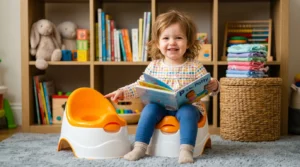
By providing a shelf with only 6–8 activities available at a time, you help your child feel calm and focused. Montessori Parent Guide (2026) suggests a rotation where you swap out 2-3 activities every week to keep the environment fresh but familiar. When each item has a specific place, the 18-month-old can help with “clean up time,” which is an essential routine for building independence.
I have observed that when a child knows exactly where their shoes go or where their coat hangs (on a low hook, of course), they are much more likely to attempt these self-care tasks on their own. This sense of order provides the emotional security they need to take the “risks” of learning new skills.
Conclusion: The Long-Term Impact of Toddler Independence
As we look at the data from 2026, it is clear that the Montessori method is no longer a niche educational choice; it is a proven model for developing high-functioning, independent individuals. A landmark 2026 study from the University of Pennsylvania found that public Montessori programs not only produced better student outcomes but also saved school districts roughly $13,000 per child in long-term intervention costs.
When you allow your 18-month-old to slice a banana, wipe a spill, or choose their own book, you are doing more than just keeping them busy. You are respecting their humanity and their desire to be a competent member of your family. In my experience, the “toddler years” are much more peaceful when we stop doing for the child and start doing with the child.
Disclaimer: Montessori activities, especially those involving water or small parts, require adult supervision. Always ensure materials are age-appropriate and non-toxic. Consult with your pediatrician regarding your child’s specific developmental milestones.
Key Takeaways for 18-Month-Old Independence
* Practical Life is Priority: Focus on real-world tasks like wiping tables and watering plants over academic toys.
* Refine the Pincer Grasp: Use posting and lid-matching activities to build fine motor precision.
* Create a “Yes” Space: Use low shelves and toddler towers to give your child safe access to their environment.
* Value of Order: Keep only 6–8 activities on the shelf at a time to reduce overwhelm and foster focus.
* Language is Power: Use real names for objects and engage in object-to-picture matching.
FAQ: Montessori for 18-Month-Olds
1. Is my child too young for a “real” knife?
In the Montessori community, we use “toddler-safe” knives, often made of wood or nylon. These allow the child to cut through soft foods like bananas but are not sharp enough to cut skin. Always supervise this activity closely.
2. How long should an 18-month-old be able to concentrate?
According to Montessori Parent Guide (2026), a “win” for this age is 2–10 minutes of repetition. Don’t expect long sessions; the goal is the quality of the engagement, not the duration.
3. Do I need to buy all-wooden toys?
No. While wood is preferred for its durability and natural feel, the Montessori method is about the function of the toy. If a plastic object allows for “posting” or “pouring,” it can still be a valuable Montessori tool.
4. My child just throws the activities. What should I do?
This often means the activity is either too hard (causing frustration) or too easy (causing boredom). Observe your child’s current “interest.” If they are throwing, they might need more gross motor “heavy work” or a ball-throwing activity instead.
5. How many toys should be on the shelf?
For an 18-month-old, 6 to 8 activities is the “sweet spot.” This prevents the “overchoice” effect, where a child becomes overwhelmed and ends up not playing with anything at all.
6. Is Montessori more expensive than traditional preschool?
Actually, the 2026 UVA study found that public Montessori programs can be more cost-effective, saving districts up to $13,000 per child while delivering better cognitive results. At home, “Practical Life” activities are virtually free.