Fun and Natural Ways to Teach Colors to Your 2-Year-Old (2026 Guide)


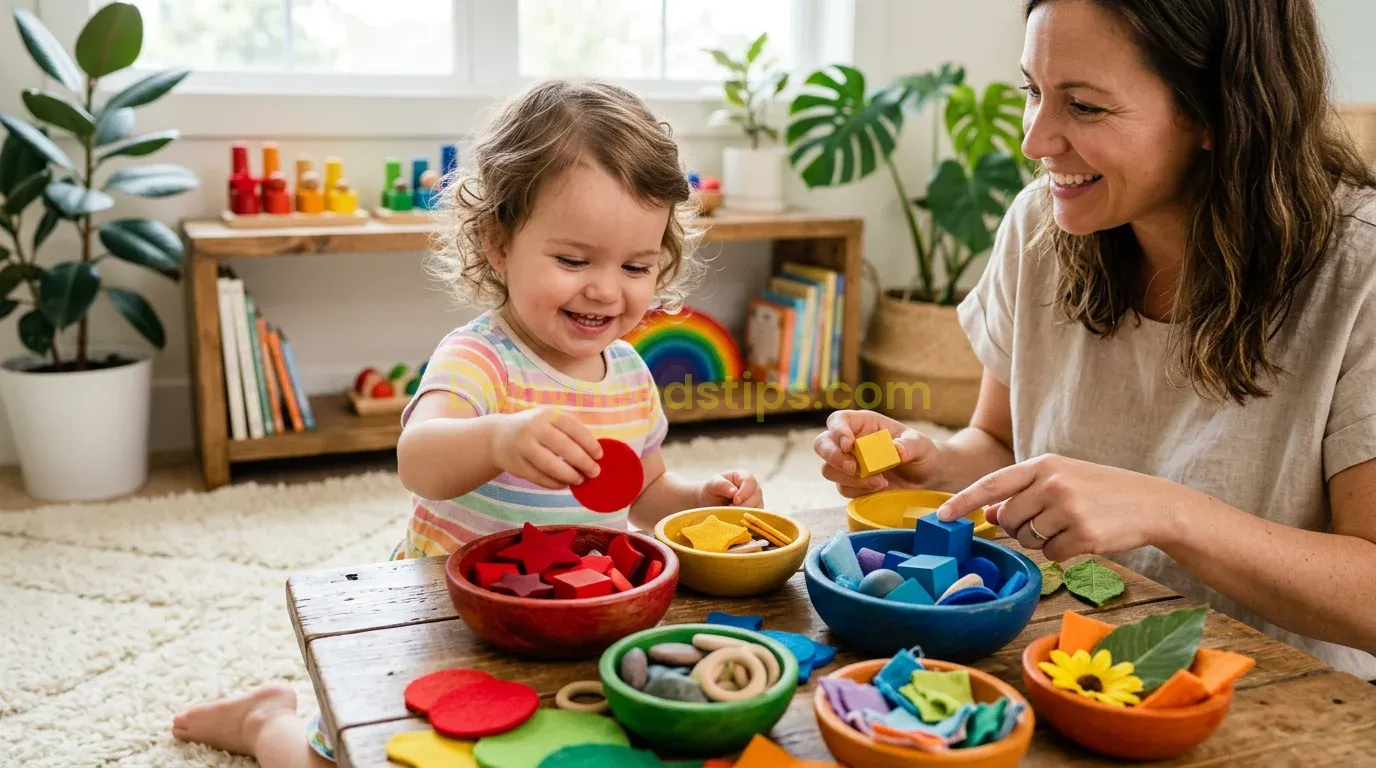
Teaching a toddler their colors often feels like opening a door to a more vibrant world. In my experience, there is a specific kind of magic that happens when a child looks at a bright red apple and, for the first time, doesn’t just see “food,” but identifies the “redness” of it. As of 2026, our understanding of early childhood development has shifted toward more integrated, play-based learning that prioritizes the “whole child.” Gone are the days of repetitive flashcards; today, we focus on natural immersion.
When you begin this journey with your two-year-old, you aren’t just teaching them vocabulary. Y[1]ou are helping them categorize the world, improve their visual discrimination, and develop the cognitive scaffolding necessary for more complex math and literacy skills later on. According to the 2026 updates from the National Institute for Early Education Research (NIEER), children who engage in high-quality, multisensory color recognition activities show a 14% higher rate of early literacy readiness by age five.
In this guide, we will explore the most effective, science-backed, and fun ways to introduce colors to your toddler. From the kitchen to the living room, and even on those restless rainy days, these strategies are designed to fit into your existing routine without feeling like “work.”
Understanding the 2-Year-Old Brain and Color Recognition
[1]By the time your child reaches their second birthday, their brain is a sponge for sensory input. However, it is important to manage your expectations based on the latest 2026 developmental standards. From what I’ve observed in developmental playgroups, many parents feel pressured if their two-year-old can’t name every color in the rainbow.
As of the February 2026 CDC “Learn the Signs. Act Early” update, the benchmark for color recognition has been refined. For a 30-month-old (2.5 years), the milestone is now defined as the ability to “show they know at least one color,” such as pointing to a red crayon when asked. This is a shift from earlier decades where expectations were often anecdotal rather than data-driven.
| Age Milestone | Expected Color Skill (2026 CDC Standards) | Percentage of Children Meeting Milestone |
|---|---|---|
| 18 Months | Begins to notice color differences; may show preference. | 75%[2] |
| 24 Months | Can often match identical colors (e.g., putting a blue block with a blue block). | 75% |
| 30 Months | Identifies and names at least one color consistently. | 75% |
| 36 Months (3 yrs) | Correctly identifies and names 3–4 primary colors. | 80% |
In my [3]experience, color learning is a three-stage process: matching, pointing (identification), and finally, naming. You mig[4]ht find that your child can perfectly match blue socks during laundry but stares blankly when you ask, “What color is this?” This is perfectly normal. Their receptive language (understanding) almost always precedes their expressive language (speaking).
The Montessori Approach: Isolation of Quality
If you have researched the Montessori method, you may know about the “Isolation of Quality.” This is a technique I have found incredibly effective for toddlers who seem overwhelmed by too much stimuli. Instead of showing your child a “blue truck,” “blue ball,” and “blue shirt” all at once, Montessori practitioners recommend focusing on the color itself.
We recommend that you start with the primary colors: Red, Blue, and Yellow. In 2026[1][5], the leading trend in Montessori-at-home environments is the use of “Color Tablets” or simple painted wooden blocks. The key is that the objects should be identical in every way except for their color. If you give a child a red plastic bird and a blue wooden car, their brain might focus on the shape or texture rather than the color. By using two identical blocks—one red and one blue—the only “quality” that is different is the color. This forces the brain to notice the hue.
When you apply this, use the “Three-Period Lesson”:
- Introduction: “This is red.” (Point to the red block).
- Association: “Can you show me the red?” (child points).
- Recall: “What is this?” (child says “red”).
From my observations, the “Association” phase is where toddlers spend the most time. Don’t rush to the “Recall” phase. If they can point to the color when you name it, they are already halfway there.
Energy-Busting Indoor Games for Toddlers on Rainy Days
We have al[6]l been there: it’s Tuesday morning, the rain is pouring down, and your two-year-old has enough energy to power a small city. When you are stuck inside, you can turn that restlessness into a massive color-learning opportunity. These Energy-Busting Indoor Games for Toddlers on Rainy Days are designed to tire them out while reinforcing their color vocabulary.
1. The Color Jump (Tape Game)
Using colored painter’s tape (or even colored paper taped to the floor), create large “islands” of color across your living room. Call out a color: “Jump to the blue island!” Encourage your child to hop, crawl, or “slither like a snake” to the corresponding color. This develops gross motor skills while requiring them to scan the environment for specific hues.
2. Balloon L[4][1][7]ava
[2][8][7][5][4][9]Balloons are a staple for 2026 indoor play because they move slowly, giving toddlers more time to react. Blow up three balloons: one red, one yellow, and one blue. The rule is “don’t let the red balloon touch the lava (the floor)!” As they swat the balloon upward, keep narrating the color. “Whoa, look at that blue balloon fly!” According to Sheryl Cooper, founder of Teaching 2 and 3 Year Olds, “Large motor activities like balloon play allow toddlers to process information through their whole bodies, making the memory of the color names ‘stick’ more effectively.”
3. The Laundry Basket Color Sort
If you need a game that lasts longer than five minutes, try a high-energy scavenger hunt. Place three laundry baskets in the center of the room, each labeled with a colored piece of paper. Tell your child, “The baskets are hungry for colors! Can you find five red things and run them back to the red basket?” The “running” part is key. It burns calories and turns a cognitive task into a physical race.
4. Indoor Ob[6]stacle Course
Use pillows (the “green mountains”), chairs (the “yellow tunnels”), and blankets (the “blue sea”) to create a path. As your child navigates the course, they have to name the color of the obstacle they are touching. In 2026, many p[1]arents are utilizing modular foam play blocks (like the Nugget or similar brands) to build these color-coded challenges.
Interactive Kitchen Learning: Colors You Can Eat
One of the most natural ways to teach colors is during mealtime. Food is inherently sensory—it has color, texture, smell, and taste. In my experience, toddlers are much more likely to remember the word “purple” if they are currently mashing a purple blueberry between their fingers.
We recommend that you adopt the “Rainbow Plate” strategy. Not only does this teach colors, but it also ensures your child is getting a variety of phytonutrients. As of 2026, the USDA’s “MyPlate” guidelines for toddlers place a heavy emphasis on visual diversity in snacks.
| Food Color | Example Toddler-Safe Food | Key Nutrient (2026 Health Standards) |
|---|---|---|
| Red | Strawberries, Red Bell Peppers | Vitamin C & Lycopene |
| Orange | Carrots, Sweet Potato | Beta-Carotene |
| Yellow | Bananas, Yellow Squash | Potassium |
| Green | Avocado, Steamed Broccoli | Healthy Fats & Fiber |
| Blue/Purple | Blueberries, Blackberries | Antioxidants |
During lunch, you might say, “You have a green broccoli tree and a yellow banana.” Ask your child to “eat the red strawberry first.” This creates a direct link between the color name and a positive sensory experience.
Disclaimer: Always supervise your child during mealtime and ensure foods are cut into age-appropriate, bite-sized pieces to prevent choking. Consult your pediatrician for specific dietary advice.
Nature Walks: Finding Primary Colors Outdoors
Even in our increasingly digital world of 2026, the outdoors remains the best classroom. A “Nature Color Walk” is a low-stress way to practice color identification. When you take your child outside, bring along a small “color bucket” or a simple cardboard egg carton with the bottom of each cup painted a different color.
In my experience, toddlers love the “treasure hunt” aspect of this activity. Their goal is to find one item in nature that matches each color in their carton. A yellow dandelion, a green leaf, a brown twig, and a grey stone.
While you walk, narrate the environment using “Color-Object” phrasing. Instead of saying, [7][4]”Look at the sky,” say, “Look at the blue sky.” This reinforces that the color is an attribute of the object. According to Amanda[5] Wilson of TeachToddler, “Using color as an adjective in every-day speech is the number one most effective way to build a toddler’s color vocabulary without them even realizing they are learning.”
Sensory Bins and Tactile Color Play
Tactile learners—which describe almost all two-year-olds—benefit immensely from sensory bins. In 2026, sensory play has become a cornerstone of “slow parenting,” focusing on unplugged, hands-on exploration.
To create a color-themed sensory bin, start with a base material. This could be dyed rice[7], water beads, or even plain water with a few drops of food coloring. For a “Blue Bin,” you might use blue-dyed rice, blue measuring cups, and small blue plastic fish.
The goal here isn’t just to see the color, but to feel it. As they pour the blue rice through their fingers, they are building neural pathways. From what I’ve observed, adding a “color-sorting” element to the bin keeps them engaged for 20–30 minutes—a lifetime in toddler years! You can hide “treasures” of different colors in the rice and have them sort the items into matching colored bowls.
Art Without the Mess: Modern 2026 Tools
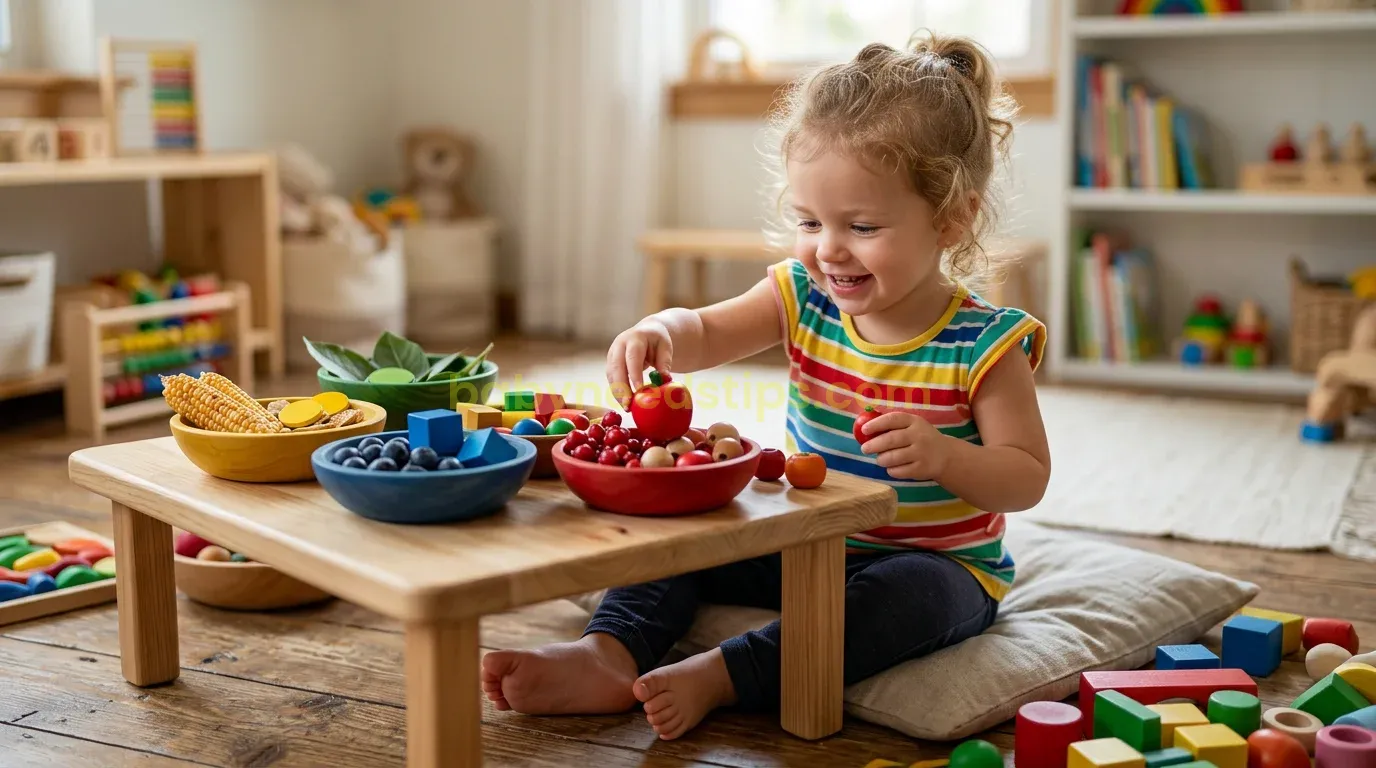
We know that many parents hesitate to do “art time” because of the cleanup. However, artistic expression is vital for color mastery. By 2026, new technology has made mess-free color play more accessible than ever.
We recommend looking into “Magic Water” mats or digital coloring tools designed specifically for toddlers. These tools allow a child to see colors appear when they apply a water-filled brush to a surface. The “Aha!” moment when the water turns the white mat into a bright green forest is a powerful reinforcer of color names.
If you prefer traditional art, “Finger Painting” is still the gold standard. In my experience, there is no substitute for the way a child’s eyes light up when they mix yellow and blue paint to create green. This “color mixing” is an advanced skill, but even a two-year-old can begin to appreciate the transformation. Always use non-toxic, washable paints, and consider doing this activity in the bathtub before a bath for the easiest cleanup imaginable.
The Role of Literacy: Top Color Books of 2026
Reading is a foundational part of color learning. In 2026, the most popular toddler books have moved toward “high-contrast” and “interactive” formats. When you read with your child, don’t just read the text; ask questions about the illustrations.
“Where is the yellow duck?”
“Can you find the green frog?”
Some of the most highly-rated color books for 2026 include:
The Spectrum Scout* by Julia Chen: An interactive book where children use a “magic lens” to find hidden colors.
Colors of the World* (2025 Edition): A book focusing on the diverse and subtle colors found in nature and different cultures.
Bear Sees Colors* by Karma Wilson: A classic that remains a staple in 2026 for its rhythmic text and clear color identification.
According to data from the American Library Association’s 2026 report on Early Childhood Literacy, toddlers who are read to for at least 15 minutes a day are 30% more likely to master basic color naming by age three compared to those who are not.
Music and Movement: Singing the Rainbow
If your toddler is anything like the ones I’ve worked with, they probably love to dance. Music is a “cheat code” for memory. Think about how easily we remember song lyrics compared to a list of facts.
In 2026, nursery rhymes have been reimagined with modern beats, but the classics still work. Songs like “The Color Song” (to the tune of If You’re Happy and You Know It) are excellent:
“If you’re wearing red, jump up and down! If you’re wearing red, jump up and down! If you’re wearing red, then show it by shaking your head, if you’re wearing red, jump up and down!”
This combines auditory learning (hearing the color), visual learning (looking at their clothes), and kinesthetic learning (jumping). This “Triple-Threat” approach ensures that the information is stored in multiple parts of the brain.
When to Seek Professional Guidance
While every child develops at their own pace, it is important to stay informed about developmental markers. As we discussed, the 2026 CDC guidelines [10][11][12][13]suggest that by 30 months, a child should know at least one color.
If your child is approaching age three and shows no interest in colors, or cannot match identical colors, it may be worth mentioning to your pediatrician during their 3-year well-check. It could be a simple matter of a different learning style, or it could indicate a need for a vision screening or a speech-language evaluation.
Disclaimer: This article is for informational purposes only and does not constitute medical advice. If you have concerns about your child’s development, vision, or potential color blindness, please consult a licensed pediatrician or developmental specialist.
Summary of the 2026 Color Learning Strategy
| Strategy | Primary Benefit | Implementation Level |
|---|---|---|
| Natural Narration | Vocabulary building | Very Easy (Daily) |
| Color Isolation | Cognitive focus | Moderate (Planned Play) |
| Energy-Busting Games | Gross motor & Retention | High Energy (Rainy Days) |
| Rainbow Plates | Nutrition & Sensory | Moderate (Mealtimes) |
| Sensory Bins | Tactile development | Moderate (Set-up required) |
Key Takeaways Box
* Start Small: Focus on one color at a time (ideally Red, Blue, or Yellow).
* Use “Color-Object” Phrasing: Say “blue car” instead of just “car” or “blue.”
* Don’t Test, Just Play: Avoid asking “What color is this?” too often. Instead, say “Look at this beautiful green leaf!”
* Integrate Movement: Use the “Energy-Busting Games” on rainy days to burn energy and teach simultaneously.
* Be Patient: Matching comes before naming. Celebrate the matches!
Frequently Asked Questions (FAQ)
1. At what age should my child know all their colors?
By 2026 standards, most children are expected to identify and name 3–4 colors by age three. Mastery of the full spectrum (including shades like “pink” or “grey”) usually occurs between ages four and five.
2. Could my 2-year-old be color blind?
Color[2][8][7][5][4][9] blindness is relatively rare in toddlers and is more common in boys (about 8%). However, it’s difficult to diagnose before age four because toddlers are still learning the names of colors. If they can match identical objects perfectly but consistently fail at naming them, consult a specialist.
3. My child calls everything “blue.” Is this normal?
Yes! This is called “over-extension.” They have learned the word “blue” and are using it as a placeholder for the concept of “color.” It shows they understand that objects have colors, even if they haven’t learned the other names yet.
4. Should I use apps to teach colors?
In 2026, high-quality educational apps can be a supplement, but they should not replace tactile play. The American Academy of Pediatrics recommends limiting screen time to less than one hour of high-quality programming for two-year-olds.
5. Why does my child forget the colors we practiced yesterday?
Toddler brains prioritize new information. Repetition is the key to moving information from short-term to long-term memory. It often takes dozens of exposures for a color name to “stick.”
6. Are certain colors easier to learn than others?
Research consistently shows that Red and Blue are the easiest for toddlers to identify first. This is likely due to their high saturation and how our eyes process primary wavelengths.
7. How can I teach colors if I’m busy and don’t have time for “activities”?
The best way is “Natural Narration.” Just talk about what you see. “I’m putting on your white shoes.” “Here is your orange juice.” This takes zero extra time but provides constant reinforcement.
Conclusion
Teaching colors to your two-year-old in 2026 is less about “lessons” and more about “living.” By integrating color talk into your snacks, your walks, and your rainy-day games, you are providing a rich, educational environment that respects your child’s developmental pace.
In my experience, the most successful parents are those who don’t treat color recognition as a test to be passed, but as a new language to be explored together. Whether you are jumping onto “blue islands” in your living room or noticing the “green grass” at the park, every interaction is a brushstroke in your child’s growing understanding of the world. Stay patient, keep it fun, and soon enough, your toddler will be the one pointing out the “yellow sun” to you.