Are Open-Ended Toys Worth It? (2026 Toddler Guide)


Discover the real magic of unstructured play and why simple toys build smarter brains.
Currently, parents are exhausted. Digital fatigue is reaching an all-time high in 2026. You buy a battery-operated robot for your toddler. It flashes. It sings. And then, ten minutes later, it is abandoned. The toy did all the work. Your child was just a spectator. But a massive shift is happening right now in playrooms across the world. We are going back to basics.
Key Takeaways
- Open-ended toys have zero predefined rules or outcomes.
- They can boost a child’s spatial reasoning by up to 21%.
- Magnetic tiles and unvarnished wooden blocks last for years.
- A simple toy rotation system prevents toddler overwhelm.
- The sustainable wooden toy market is booming, hitting $30.4 billion in 2026.
_This content is for general informational purposes only; it does not replace professional educational or psychological advice._
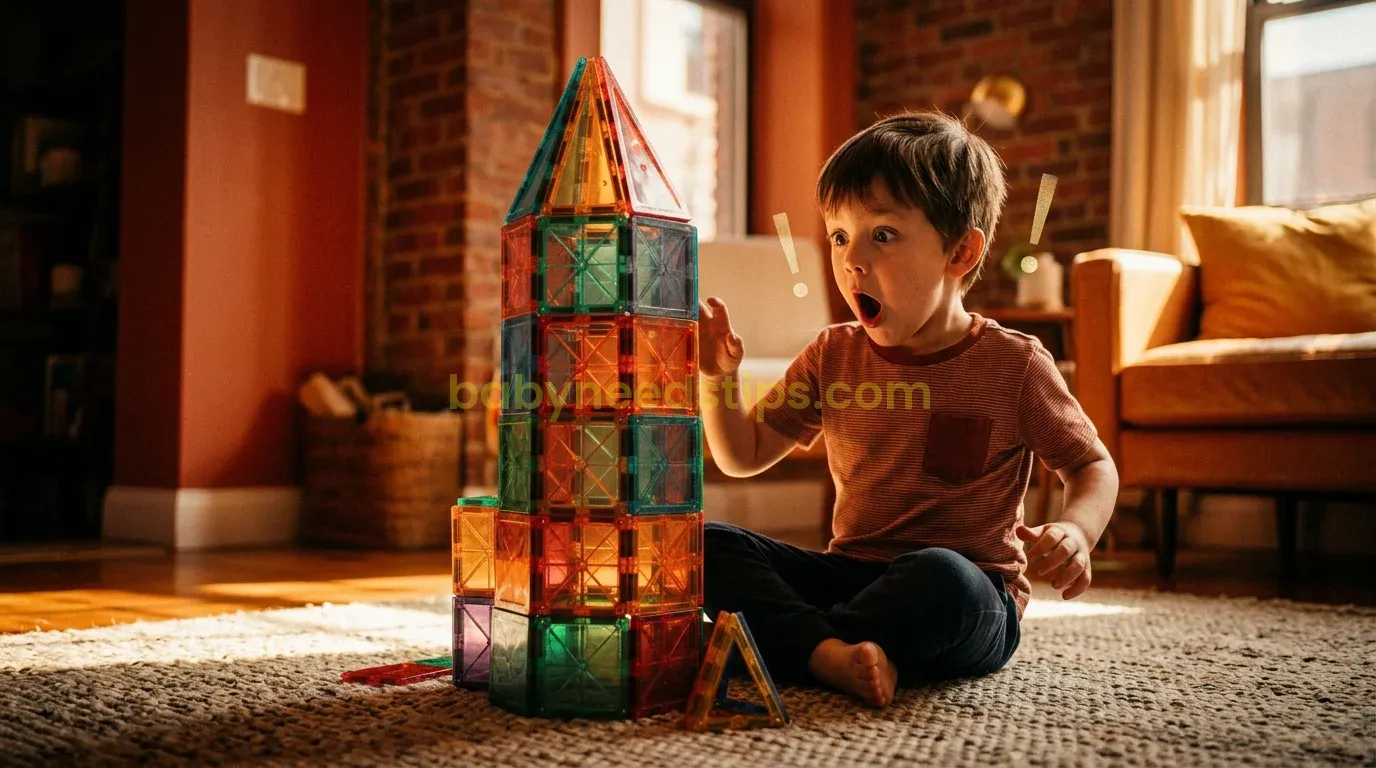
Leo is four. He sits on a faded wool rug. The afternoon sun hits the floorboards of his apartment. He holds two translucent magnetic tiles. He snaps them together. The satisfying “click” echoes in the quiet room. “This is mission control,” he mutters. He is not following a manual. There are no flashing lights. No obnoxious sirens. He is just thinking. Frankly, this is exactly what play should look like.
You see, open-ended toys are not just a passing social media aesthetic. They are fundamental tools for cognitive development. When you strip away the screens and the microchips, something incredible happens. A child learns how to think. They learn how to fail. They learn how to try again.
Let’s break down exactly why these toys are taking over in 2026, and which ones actually deserve a spot in your home.
What Makes a Toy Truly “Open-Ended”? 🧩
Quick Answer: A truly open-ended toy does not dictate how it should be used. It has no batteries, no rules, and no single outcome. The child provides the imagination, making the play experience 10% object and 90% child.
Think about a standard puzzle. It has one solution. Once the last piece is placed, the game is over. The child has achieved the predetermined goal. This is a close-ended toy. It is great for specific skills, but it has a hard stop.
Open-ended toys are the exact opposite. They are infinite. A wooden block can be a phone. It can be a brick for a castle. It can be a bridge for a toy car. The toy does not care what it is. The child decides.
This lack of structure is crucial. It forces the brain to work harder. Without a manual, children must figure out how to balance towers. They must connect pieces through trial and error. This builds critical thinking skills.
You might notice your toddler talking to themselves while playing. This “self-talk” is massive for language development. They are narrating their actions. They are building sentence structures without even realizing it. They are in complete control of their universe.
Why Are These Toys So Crucial in 2026? 🧠
Quick Answer: In a highly digital 2026, children suffer from screen fatigue. Open-ended toys provide essential tactile feedback, teach real-world physics, and heavily support emotional regulation and resilience when builds inevitably collapse.
The modern childhood is saturated with screens. Tablets at dinner. Phones in the car. Interactive smartboards in preschool. By the time a child gets home, their brain is overstimulated. They do not need another screen. They need friction. They need gravity.
When a child builds a marble run and it collapses, they get frustrated. That is a good thing. Open-ended play is self-directed. When the structure falls, a child learns patience. They learn resilience. These are skills you simply cannot learn from tapping a glass screen.
The data backs this up entirely. Research shows that open-ended building toys enhance spatial reasoning by up to 21% after just three weeks of structured practice. This directly supports future STEM success. You are quite literally building a smarter brain.
The industry sees this trend clearly. The demand for Montessori-inspired toys is surging. Parents are actively avoiding screens. They want toys that support self-directed learning. They want non-toxic materials. The market is listening, and the shift is undeniable.
Which Magnetic Tiles Are Actually Better? 🧲
Quick Answer: In 2026, Connetix leads for complex builds with stronger magnets and Smart-Spin technology, while Magna-Tiles remains the classic standard, especially with their travel-friendly Micro sets. Both offer incredible open-ended value.
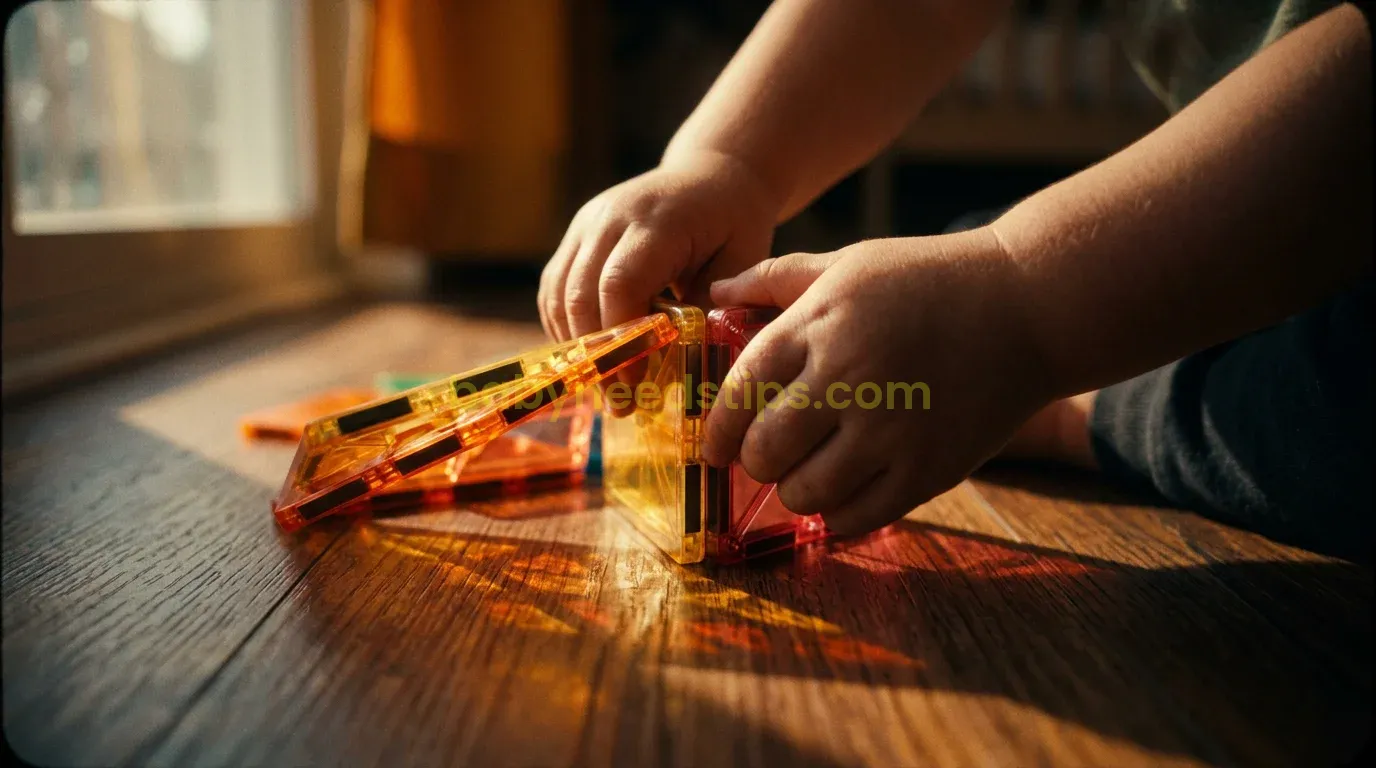
If you ask any modern parent about their best toy investment, they will say magnetic tiles. They are the gold standard. But the rivalry between brands is fierce. You are usually choosing between Connetix and Magna-Tiles. Both are excellent, but they serve slightly different needs.
Connetix is known for stronger magnets and vibrant, clear colors. They allow for much taller, more stable builds. In 2025, Connetix launched the Pro Constructor Set. It features Smart-Spin technology, where the magnets rotate 360 degrees inside the tile. This allows older kids to build intricate, off-grid designs.
They also introduced the Light Star Pack. It includes a rechargeable light-up tile that turns any castle into a glowing nightlight. The innovation here is off the charts. It pushes the boundaries of standard block play.
Magna-Tiles, on the other hand, is the trusted classic. They are incredibly durable. Recently, they dominated the travel market with Magna-Tiles Micro. These miniature sets fit on an airplane tray table. They turn a nightmare flight into a quiet, focused building session. The tactile “click” of the magnets actually reduces travel stress for kids.
[Internal Link Suggestion: “best travel toys for toddlers on long flights”]
How Do Wooden Blocks Grow With Kids? 🧱
Quick Answer: Wooden blocks adapt to a child’s developmental stage. A one-year-old bangs them together for sensory feedback. A three-year-old builds simple roads. A five-year-old engineers complex, gravity-defying architecture.
Wood is timeless. It has weight. It has texture. When a wooden block hits the floor, it sounds real. You cannot fake that sensory input. And parents are buying them in record numbers. The wooden toys market is expected to hit $30.4 billion in 2026.
Major corporations are making massive moves. Spin Master recently acquired the beloved wooden toy brand Melissa & Doug for a staggering $950 million. Fisher-Price launched a brand new line called “Fisher-Price Wood” to capture this exact demand. Wood is not a niche anymore. It is mainstream.
The beauty of a basic wooden block set is its longevity. Think about your toddler. At 18 months, they just want to knock a tower down. They are learning cause and effect. They might taste the block. They bang two together to hear the sound.
Fast forward to age three. That same block is now a garage for a toy car. By age five, they are building elaborate cities. The toy never changed. The child did. The blocks merely kept up with their expanding imagination. You buy them once, and they last a decade.
Are Play Silks Really Worth the Hype? 🧣
Quick Answer: Yes. Play silks are incredibly versatile, lightweight squares of fabric that can transform into anything: a superhero cape, a doll’s blanket, a blue river, or a green pasture. They are the ultimate imagination tool.
You might look at a $20 square of dyed silk and think it is a scam. I get it. It is just fabric. But watch a child play with it. It will change your mind instantly. Play silks are perhaps the most open-ended toy in existence.
They weigh nothing. They move beautifully in the air. A child ties a red silk around their neck. Instantly, they are a superhero. They throw a blue silk on the ground. Suddenly, it is a raging river that their wooden animals must cross.
They use them for peek-a-boo. They wrap their dolls in them. They build forts by draping them over chairs. A play silk has absolutely no physical limitations. It cannot break. It does not run out of batteries.
In a playroom full of rigid plastic and heavy wood, play silks offer softness. They invite gross motor movement. Kids dance with them. They run with them catching the wind. If you want to spark pure, unscripted creativity, hand your toddler a piece of silk.
Why Are Loose Parts the Ultimate Hack? 🪵
Quick Answer: Loose parts are everyday items—like pebbles, PVC pipes, cardboard boxes, or large magnetic panels—that can be moved, combined, and redesigned infinitely. They encourage spontaneous STEM behaviors.
You do not always have to spend a fortune. Sometimes, the best toys are not toys at all. They are loose parts. This is a concept heavily rooted in Montessori and Reggio Emilia philosophies. Loose parts are just materials with no specific purpose.
Think about cardboard boxes. Crates. Ropes. Natural wood slices. Pinecones. When you give a child a bin of loose parts, they become an engineer. They start constructing. They measure. They hypothesize.
Children combine these materials in ways adults would never imagine. A PVC pipe becomes a telescope. A crate becomes a spaceship console. This type of play demands total engagement. It is messy. It is chaotic. But it is highly educational.
If you want a premium version of this, look at life-sized construction sets. Brands like Superspace make large, magnetic fabric panels. Kids can build their own life-sized forts. It combines open-ended creativity with heavy gross motor development. They are physically climbing into the worlds they build.
[Internal Link Suggestion: “creating a Montessori-friendly home environment”]
How to Set Up a Toy Rotation System? 🔄
Quick Answer: A toy rotation system involves keeping only 5 to 7 open-ended toys out at one time, storing the rest out of sight. Swapping them every few weeks prevents overwhelm and drastically deepens independent play.
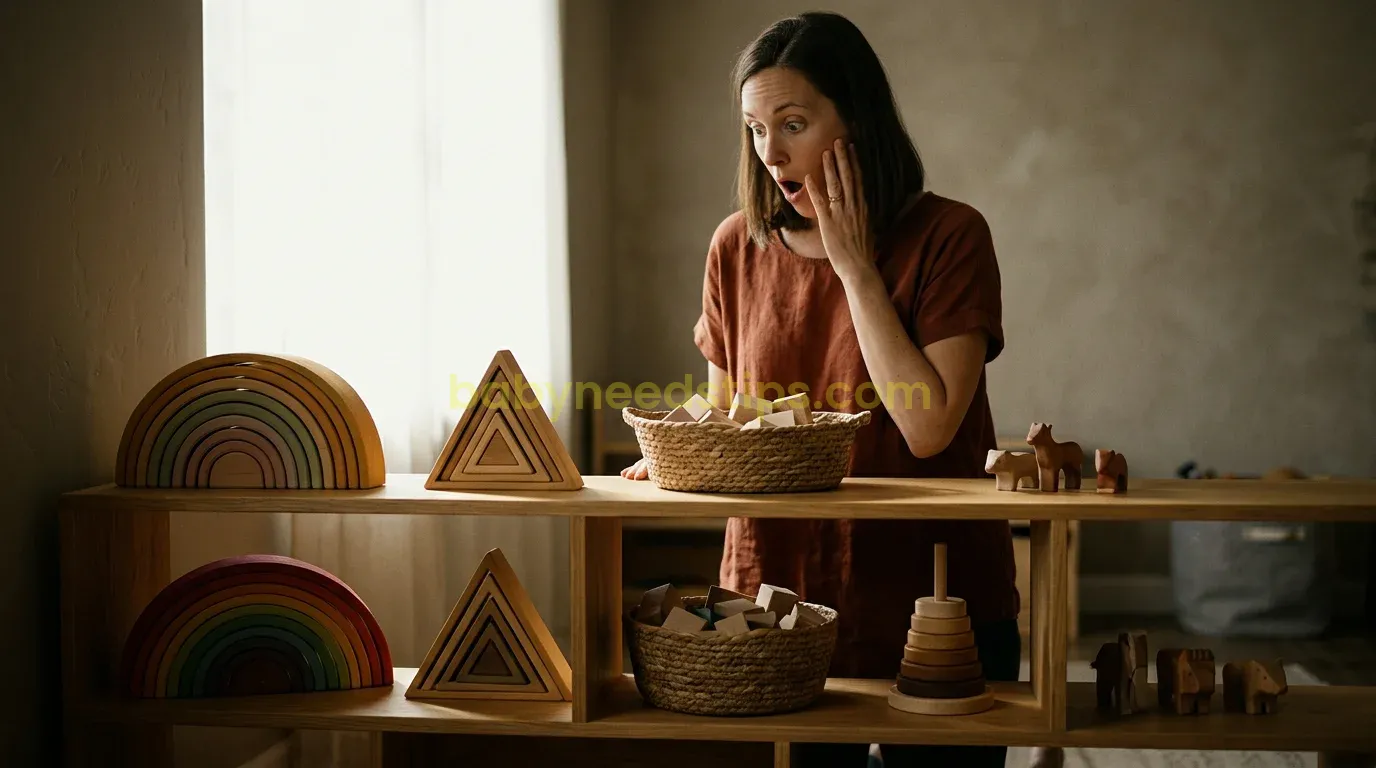
Here is the dirty secret of modern parenting. Having too many toys actually ruins play. When a toddler walks into a room overflowing with plastic junk, they freeze. They dump a bin out, play for two minutes, and walk away. It is cognitive overload.
The solution is toy rotation. You do not need to throw everything away. You just need to hide most of it. Research and Montessori educators agree: you should only have 5 to 7 toys in active circulation at any given time.
Store the rest in a closet. Out of sight, out of mind. Every two to three weeks, swap one or two items. The results are immediate. When a child has fewer choices, they engage much