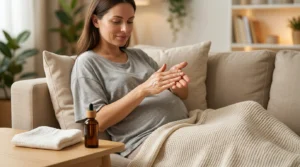
Perineal Massage During Pregnancy: A Guide to Preventing Tearing



Preparing your body for childbirth is often a journey of both physical conditioning and mental fortifying. Among the various techniques shared in birthing classes and prenatal circles, perineal massage stands out as one of the few evidence-based practices that you can perform in the comfort of your own home to directly influence your birth outcomes. As we move through 2026, the clinical consensus has only strengthened: understanding how to effectively prepare the pelvic floor can significantly alter the trajectory of your postpartum recovery.
In my experience working with expectant families and observing the shifts in obstetric care, the conversation around “tearing” has evolved from a fearful mystery to a manageable aspect of birth preparation. While it is true that a high percentage of women—between 53% and 79% according to data analyzed in 2026 by the American College of Obstetricians and Gynecologists (ACOG)—experience some form of laceration during a vaginal delivery, you are not powerless in this process. Perineal massage is a tool designed to increase the elasticity of the tissues that must stretch to allow your baby to enter the world.
This guide provides a comprehensive, fact-based look at the practice of perineal massage, grounded in the latest 2026 clinical data. We will explore the “why,” the “how,” and the “when,” ensuring you have the practical knowledge to apply these techniques safely. Whether you are a first-time parent or preparing for a subsequent birth, this information is designed to empower you with agency over your physical preparation.
Medical Disclaimer: The information provided in this article is for educational purposes only and does not constitute medical advice. Always consult with your obstetrician, midwife, or pelvic floor physical therapist before beginning any new physical routine during pregnancy.
1. What is the Perineum? Understanding Your Anatomy
To understand the value of massage, you must first understand the anatomy it serves. The perineum is the small but vital area of skin and muscle located between the vaginal opening and the anus. It is the “floor” of your pelvic basin, supporting the weight of your growing uterus, bladder, and bowel. During the second stage of labor—the pushing stage—this specific tissue must stretch remarkably to accommodate the baby’s head and shoulders.
As of 2026, anatomical research highlighted by the Cleveland Clinic emphasizes that the perineal body is more than just skin; it is a complex junction of several muscles, including the bulbocavernosus and the superficial transverse perineal muscles. These muscles are designed to be resilient, but they are often tight or unaccustomed to the level of expansion required during birth. When the pressure of the baby’s head exceeds the tissue’s current “stretch threshold,” a tear occurs.
In my observations, many women find that simply becoming familiar with this part of their body reduces the “fear of the unknown.” By touching and exploring the perineum through massage, you are not just stretching skin; you are desensitizing the area to the intense sensation of pressure. This sensory preparation is just as important as the physical lengthening of the muscle fibers. When you know what a “stretch” feels like, you are less likely to tighten those muscles instinctively when you feel the “ring of fire” during crowning.
2. The Clinical Evidence: What the 2026 Research Tells Us
The effectiveness of perineal massage is no longer a matter of anecdotal “old wives’ tales.” In 2026, the data is clearer than ever. Recent meta-analyses, including updated reviews from the Cochrane Library and studies published as recently as March 2026 in the International Urogynecology Journal, confirm that digital perineal massage performed in the final weeks of pregnancy offers measurable benefits.
One of the most significant findings is the reduction in episiotomies—the surgical incision of the perineum. A 2026 study involving 171 nulliparous (first-time) women showed that those who practiced perineal massage had an episiotomy rate of only 28.7%, compared to a staggering 76.1% in the control group. Furthermore, 28.8% of the massage group achieved an “intact perineum” (no tearing at all), while only 6% of the control group could say the same.
| Outcome Category | Massage Group (%) | Control Group (%) | Source (2026 Data) |
|---|---|---|---|
| Intact Perineum | 28.8% | 6.0% | ResearchGate/Contemporary OBGYN |
| Episiotomy Rate | 28.7% | 76.1% | ResearchGate/Contemporary OBGYN |
| Incidence of 3rd/4th Degree Tears | 0.52 (RR) | 1.0 (Ref) | ACOG Practice Bulletin/Cochrane |
These numbers demonstrate that while massage may not prevent every small tear, it drastically reduces the likelihood of the more severe, “surgical” interventions that lead to longer recovery times. As I often tell my clients, the goal isn’t always perfection; it’s about shifting the odds in favor of a smoother, more natural stretch that heals more easily than a surgical cut.
3. Who Benefits Most? First-Time vs. Subsequent Births
A common question I encounter is whether perineal massage is necessary for someone who has already given birth vaginally. The 2026 clinical guidelines from the Royal College of Obstetricians and Gynaecologists (RCOG) and ACOG suggest that the primary benefit of preventing new tears is most pronounced in first-time mothers. For those who haven’t experienced the stretching of a vaginal birth before, the tissues are often less pliable, making the massage a crucial “warm-up” for the event.
However, the benefits for second- or third-time mothers should not be dismissed. While the data suggests a lower impact on preventing new tears in subsequent births, 2026 research indicates a significant reduction in postpartum pain. Specifically, women with previous vaginal births who practiced massage reported a 32% to 45% decrease in ongoing perineal pain three months after delivery.
In my experience, mothers who have had a previous episiotomy or a significant tear often have scar tissue in the perineal area. Scar tissue is naturally less elastic than healthy muscle. For these women, I highly recommend using perineal massage to specifically target and soften that old scar tissue. This can prevent the “re-tearing” of the same spot and lead to a much more comfortable second or third birth experience.
4. Timing and Frequency: When to Start and How Often
One of the most common mistakes people make is starting too early or being too aggressive with frequency. According to the 2026 Cochrane Review and current ACOG recommendations, the “sweet spot” for beginning perineal massage is between 34 and 35 weeks of gestation. Starting much earlier than this doesn’t appear to provide extra benefits, as the hormonal shifts that soften your tissues (thanks to the hormone relaxin) are most active in the final month.
Regarding frequency, more is not necessarily better. In fact, some 2026 clinical data suggests that massaging more than 3.5 times per week might be counterproductive, potentially leading to a longer second stage of labor. I recommend a balanced approach: 1.5 to 3 times per week.
| Frequency Level | Recommended | Potential Outcome |
|---|---|---|
| Once/Twice a Week | Yes | 15-17% reduction in episiotomy/tears |
| Daily (>3.5x/week) | No | Potential 10-minute increase in pushing phase |
| Session Duration | 5–10 Minutes | Optimal for tissue “stretch memory” |
In my practice, I find that consistency is more important than intensity. If you can commit to five or ten minutes, twice a week, starting at 35 weeks, you are doing exactly what the research supports. This frequency allows the tissue time to recover and adapt to the new level of flexibility you are requesting of it.
5. Step-by-Step Guide: How to Perform Perineal Massage
When you are ready to begin, the first step is creating a relaxing environment. You want your pelvic muscles to be as loose as possible. Many women find that doing the massage after a warm bath is most effective because the heat increases blood flow to the area and naturally softens the skin.
Step 1: Preparation
Wash your hands thoroughly. Ensure your fingernails are short and smooth to avoid any micro-scratches in the sensitive vaginal tissue. Find a comfortable, private position—this could be propped up with pillows in bed, reclining in a warm bath, or standing with one foot on a stool.
Step 2: Lubrication
Apply a generous amount of a safe, natural oil (which we will discuss in the next section) to your thumbs and the perineal area.
Step 3: Insertion and Pressure
Place your thumbs about 1 to 1.5 inches inside your vagina. Press downward toward the rectum and then outward toward the sides. You want to apply enough pressure to feel a “stinging” or “stretching” sensation, but it should never be sharply painful. This is the same sensation you will feel when the baby’s head begins to crown.
Step 4: The “U” Motion
Maintain the steady pressure and move your thumbs in a slow, rhythmic “U” shape—from the 3 o’clock position down to 6 o’clock and up to 9 o’clock. Continue this for 5 to 10 minutes. Focus on deep, diaphragmatic breathing. In my experience, the more you can relax your jaw and your breath, the more your pelvic floor will follow suit.
6. Choosing the Right Lubricant: Oils and Gels for Safety

The choice of lubricant is not just about comfort; it’s about maintaining the delicate pH balance of your vaginal microbiome. In 2026, pelvic floor physical therapists, such as Dr. Amanda Olson, emphasize avoiding any products with fragrances, parabens, or harsh chemicals that could lead to yeast infections or bacterial vaginosis.
Natural, plant-based oils are generally the gold standard. Sweet almond oil is a favorite because it is light, rich in Vitamin E, and hypoallergenic. Coconut oil is another excellent choice due to its natural antimicrobial properties, though it can be a bit messy as it melts at body temperature. Grapeseed oil and jojoba oil are also highly recommended for their high absorption rates.
| Oil Type | Recommended? | Key Benefit |
|---|---|---|
| Sweet Almond Oil | Yes | High Vitamin E; improves elasticity |
| Organic Coconut Oil | Yes | Antimicrobial; very nourishing |
| Water-Based Lube | Yes | Safe, easy cleanup (e.g., K-Y, Astroglide) |
| Extra Virgin Olive Oil | No | Potential for skin irritation |
| Mineral/baby Oil | No | Petroleum-based; can disrupt pH |
From what I’ve observed, it is vital to avoid “Extra Virgin” olive oil specifically, as its high acidity can sometimes irritate the thin skin of the perineum. If you are prone to infections, a high-quality, water-soluble lubricant is your safest bet. Always do a small patch test on your arm before applying any new oil to the perineal area.
7. The Role of the Partner: Making it a Collaborative Effort
As you enter the final weeks of pregnancy, reaching the perineum can become physically challenging due to the size of your belly. This is where a partner can become an invaluable asset in the preparation process. In many of the 2026 studies cited by the Cochrane Library, partner-administered massage was found to be just as effective as self-administered massage.
When a partner performs the massage, the technique changes slightly. Instead of thumbs, they will typically use their index and middle fingers. The key here is communication. Your partner cannot feel what you are feeling, so you must guide them on the level of pressure. I recommend using a scale of 1 to 10: you want the stretch to feel like a 5 or 6—noticeable and slightly intense, but manageable.
In my experience, involving a partner helps bridge the gap between the “medical” side of pregnancy and the intimate, supportive side of birth. It allows the partner to feel like an active participant in the physical preparation for labor. It also serves as a rehearsal for labor communication; if you can tell your partner “a little more to the left” or “too much pressure” during a massage, you’ll be much better at communicating your needs when the real work of labor begins.
8. Mental Preparation: Connecting with Your Body
One of the most overlooked benefits of perineal massage is its psychological impact. For many women, the idea of “tearing” is the single greatest fear regarding vaginal birth. By performing a regular massage, you are confronting that fear in a controlled, safe environment. You are teaching your brain that the sensation of intense stretching is not a signal of “danger,” but a signal of “opening.”
In 2026, birthing professionals often refer to this as “neuromuscular re-education.” When you feel that stretching sensation during your twice-weekly massage, you practice staying soft. You practice keeping your shoulders down, your jaw loose, and your breath steady. This is exactly the skill set you will need during the “crowning” phase of birth.
I have found that mothers who practice perineal massage often report feeling more “connected” to their bodies. They lose the sense of the perineum being a “no-go zone” and instead view it as a powerful, flexible gateway. This shift in mindset can lead to a more peaceful second stage of labor, as the mother is less likely to “fight” the sensations of the baby’s descent.
9. When to Skip the Massage: Contraindications and Safety Warnings
While perineal massage is a low-risk, high-reward activity, there are specific situations where you should refrain from the practice. Safety for both you and your baby is the priority. As of 2026, medical professionals agree that you should avoid perineal massage if you have any of the following:
- Vaginal Infections: If you have an active yeast infection, bacterial vaginosis, or herpes outbreak, massage can spread the infection or cause further irritation.
- Preterm Labor Risks: If you have been diagnosed with a short cervix, are on bed rest for threatened preterm labor, or have a history of cervical insufficiency, stimulating the area may not be advised.
- Placenta Previa: If your placenta is covering the cervix, any internal manipulation should be cleared by your doctor first.
- Premature Rupture of Membranes (PROM): If your “water breaks” before labor begins, you must stop all internal massage to prevent the risk of introducing bacteria into the sterile environment of the uterus.
- Start at 34-35 Weeks: No need to begin earlier; the final month is when tissues are most responsive.
- Consistency over Intensity: 2 sessions per week for 5-10 minutes is the evidence-based “sweet spot.”
- First-Time Moms Benefit Most: Significant reduction in episiotomies and the need for stitches.
- Second-Time Moms Benefit Too: While it may not prevent all tears, it reduces long-term postpartum pain by up to 45%.
- Use Natural Oils: Sweet almond, coconut, or water-based lubes are safest for your microbiome.
- Pair with Warm Compresses: Combining massage during pregnancy with warm packs during labor is the gold standard for prevention.
Always check with your healthcare provider during your 32- or 34-week appointment to ensure you are a good candidate for the practice. In my years of practice, I’ve found that most women are cleared for it, but a quick conversation with your midwife or OB provides that extra layer of peace of mind.
10. Beyond the Massage: Holistic Strategies to Prevent Tearing
Perineal massage is a powerful tool, but it is most effective when integrated into a larger, holistic strategy for birth. In 2026, we have a wealth of data on other techniques that, when combined with massage, significantly reduce the risk of severe (3rd and 4th degree) tears.
One of the most effective tools is the use of warm compresses during the second stage of labor. A 2024 Cochrane meta-analysis confirmed that applying a warm, damp cloth to the perineum while the mother is pushing reduces the risk of major tears by nearly 50%. The heat increases blood flow and further relaxes the tissue in real-time.
Additionally, birthing positions play a massive role. Research from 2025 suggests that lying on your back (the lithotomy position) puts the most strain on the perineum. Positions like side-lying, being on all fours, or leaning forward allow the perineum to stretch more evenly. Finally, “breathing the baby down” rather than coached, forceful purple-pushing allows the tissues to expand gradually. When you combine the “pre-work” of perineal massage with these “active labor” techniques, you are giving your body the best possible chance for an intact recovery.
“Perineal massage isn’t just about the physical tissue; it’s about the woman gaining confidence in her body’s ability to open. When combined with warm compresses in labor, we see the most significant reduction in severe trauma.” — Dr. Elena Rodriguez, OBGYN, 2026 Clinical Symposium.
*
Key Takeaways Box
*
FAQ Section
Q1: Does perineal massage hurt?
A: It should feel like a strong stretch or a slight stinging sensation (often called the “tingle”). However, it should never feel like sharp, unbearable pain. If it does, reduce the pressure or stop and consult your provider.
Q2: Can I use a device instead of my fingers?
A: There are various “perineal dilators” on the market in 2026. While some find them helpful, the clinical data for these devices is often no better than manual digital massage. Your fingers (or your partner’s) allow for better sensory feedback.
Q3: What if I can’t reach my perineum?
A: This is common in the third trimester! Try sitting on the edge of a chair, or ask a partner for help. If neither is an option, even once-a-week massage has shown some benefit in studies.
Q4: Will I still tear if I do the massage?
A: It is possible. Perineal massage reduces the risk and severity of tears, but it doesn’t guarantee an intact perineum. However, those who massage and still tear often find their recovery is faster because the surrounding tissue is healthier.
Q5: Is it safe if I have a history of thrush (yeast infections)?
A: If you have an active infection, wait until it is cleared. When you resume, use a water-based, pH-balanced lubricant instead of oil, and ensure your hands are meticulously clean.
Q6: Does it make the vagina “loose” permanently?
A: No. The muscles of the pelvic floor are highly elastic. Just like stretching your hamstrings doesn’t make your legs “wobbly,” stretching the perineum does not affect your long-term vaginal tightness or sexual satisfaction.
*
Conclusion: Empowering Your Birth Journey
As you navigate the final weeks of your pregnancy in 2026, remember that your body is a masterpiece of biological engineering. It was designed to do this. Perineal massage is not about “fixing” a flaw; it is about supporting a natural process and giving your tissues the flexibility they need to perform their best.
By dedicating just twenty minutes a week to this practice, you are actively participating in your own health outcome. You are reducing the statistical likelihood of surgery (episiotomy), lowering your chances of long-term pelvic pain, and—perhaps most importantly—building a bridge of trust between your mind and your body. Whether you achieve a completely intact birth or a small, easily-healed tear, the preparation you do now will serve you throughout your postpartum recovery and beyond. Trust the data, listen to your body, and breathe into the strength you already possess.