Toddler Language Milestones: Boost Vocabulary Through Play


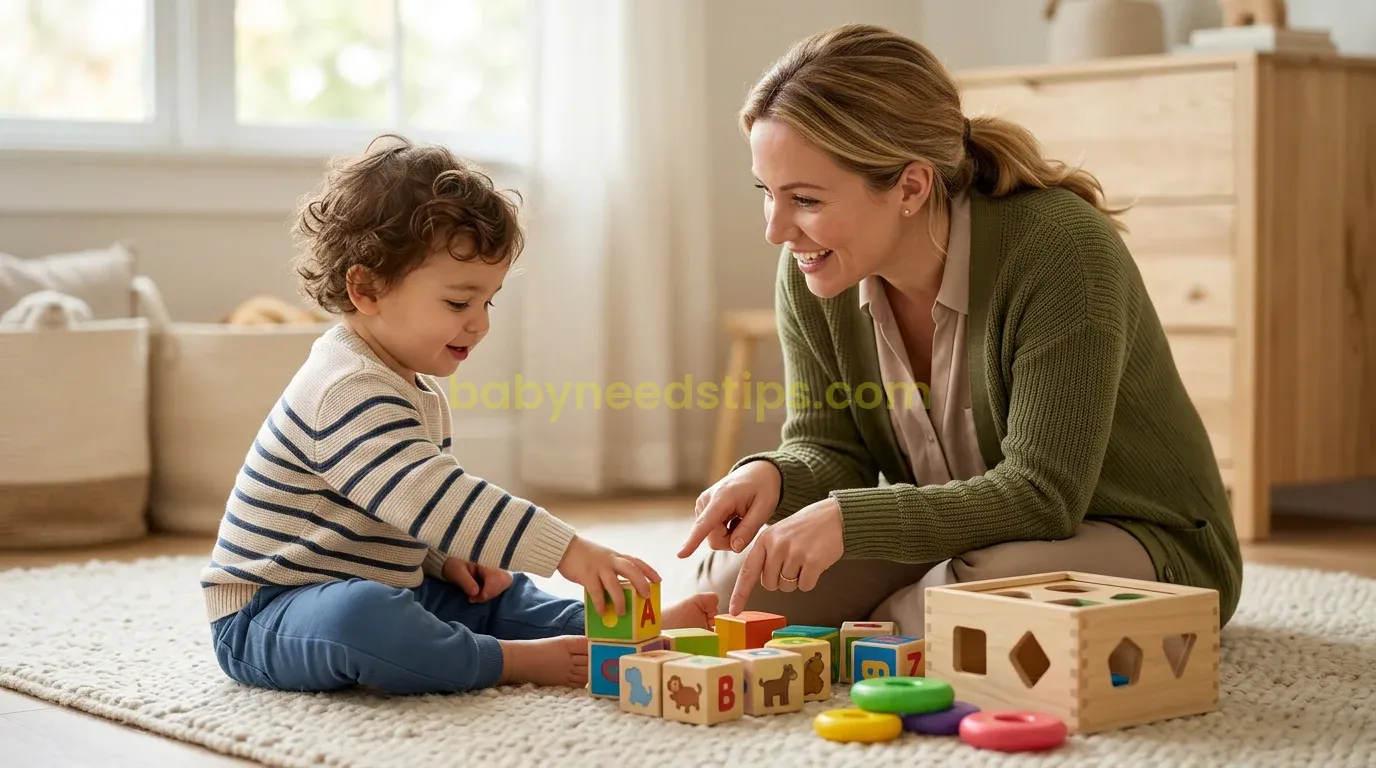
The journey from a baby’s first coo to a toddler’s first full sentence is one of the most miraculous transformations you will witness as a parent. By 2026, our understanding of early childhood neuroplasticity has reached new heights, emphasizing that the most profound cognitive growth doesn’t happen in front of a screen, but through the simple, joyful act of play. While every child follows their own unique timeline, understanding the specific markers of linguistic development allows you to support your little one with confidence and intent.
In today’s fast-paced digital world, the “serve and return” interaction—where a child gestures or speaks and an adult responds—remains the gold standard for brain development. This guide explores how you can transform everyday playtime into a rich linguistic environment. We will break down the essential milestones for 2026 and provide practical, evidence-based strategies to help your toddler expand their vocabulary naturally. Whether your child is just beginning to point at objects or is starting to string together short stories, these insights will empower you to be their most effective teacher.
İçindekiler
- Understanding Language Milestones in 2026
- The Science of Play-Based Vocabulary Growth
- Age-Specific Play Strategies for Speech Support
- Essential Tools and Activities for Language Enrichment
- Navigating Digital Integration and Speech Development
- When to Consult a Pediatric Speech Pathologist
- Sonuç
- Sıkça Sorulan Sorular
Understanding Language Milestones in 2026
As we move through 2026, the benchmarks for toddler development have become more nuanced. Experts now distinguish more clearly between receptive language (what a child understands) and expressive language (what a child says). Often, a toddler’s ability to follow directions far outpaces their ability to verbalize thoughts, which can sometimes lead to the “terrible twos” frustration.
By the age of 18 months, most toddlers have a vocabulary of about 10 to 50 words, though they understand significantly more. By their second birthday, the “word spurt” typically occurs, where children begin combining two words into simple phrases like “more juice” or “doggy run.” By age three, your child should be conversational enough that even strangers can understand about 75% of what they are saying.
💡 Önemli: Milestones are not rigid deadlines but rather a range. If your child is focusing heavily on motor skills like climbing or running, their language growth might briefly plateau before surging again.
The 12 to 24 Month Window
During this phase, toddlers transition from single words to “telegraphic speech.” They use nouns primarily to label their world. You will notice them pointing to pictures in books and looking at you for confirmation. This is the ideal time to implement “labeling play,” where you narrate everything they touch and see.
The 24 to 36 Month Explosion
This is the era of “Why?” and “What’s that?” Your toddler is not just learning labels; they are learning concepts. They begin to use pronouns (I, me, you) and prepositions (in, on, under). Their vocabulary grows from 50 words to over 500-1,000 words by the time they hit three years old.
The Science of Play-Based Vocabulary Growth
Why is play so effective? In 2026, neuro-imaging studies continue to show that when children are engaged in joyful, self-directed play, their brains release dopamine, which enhances memory retention and neural connectivity. Language isn’t learned through rote memorization at this age; it is learned through meaningful context.
When you play “store” with your toddler, the word “apple” isn’t just a sound. It’s a red object they can hold, a weight in their hand, and a “transaction” they make with you. This multi-sensory experience anchors the word in their long-term memory far more effectively than a flashcard ever could.
| Age Range | Key Language Milestone | Recommended Play Activity |
|---|---|---|
| 12-18 Months | Uses 5-20 words, follows simple commands | Sensory bins with hidden objects |
| 18-24 Months | Two-word phrases, points to body parts | “Simon Says” or “Point to the Nose” |
| 24-30 Months | Uses “in” and “on”, asks simple questions | Block building with spatial narration |
| 30-36 Months | Uses plurals and past tense, 3+ word sentences | Dramatic role-play (Doctor/Chef) |
“Language development is a social process. It is the bridge built between a child’s inner thoughts and the outside world through the medium of human connection.” — Dr. Elena Vance, child Development Specialist (2026)
Age-Specific Play Strategies for Speech Support
To maximize vocabulary growth, you should tailor your play style to your child’s current developmental stage. For more specific advice on infant and toddler care, you can find a wealth of resources at babyneedstips.com, which offers deep dives into various developmental stages.
Narrating the “Silent” Play (12-18 Months)
At this age, your child might play mostly in silence or with babbling. Your job is to be the “sports commentator” of their life. If they pick up a ball, you say, “You have the big, blue ball! You’re rolling it. Roll, roll, roll!” This associates the action with the vocabulary in real-time. Avoid asking “What’s this?” constantly, as it puts pressure on the child. Instead, use declarative statements.
Expanding the Phrase (18-24 Months)
When your child says a single word, expand it. If they point and say “Car,” you respond with, “Yes, a fast, red car!” This technique, known as expansion, models the next level of grammar without correcting them directly. It builds their confidence while providing the linguistic map for their next milestone.
Functional Grouping (24-36 Months)
Start playing sorting games. “Let’s put all the animals in the barn and all the cars in the garage.” This teaches categorization, which is a high-level cognitive skill essential for expanding vocabulary beyond simple naming. It helps them understand that words belong to families or groups.
Essential Tools and Activities for Language Enrichment
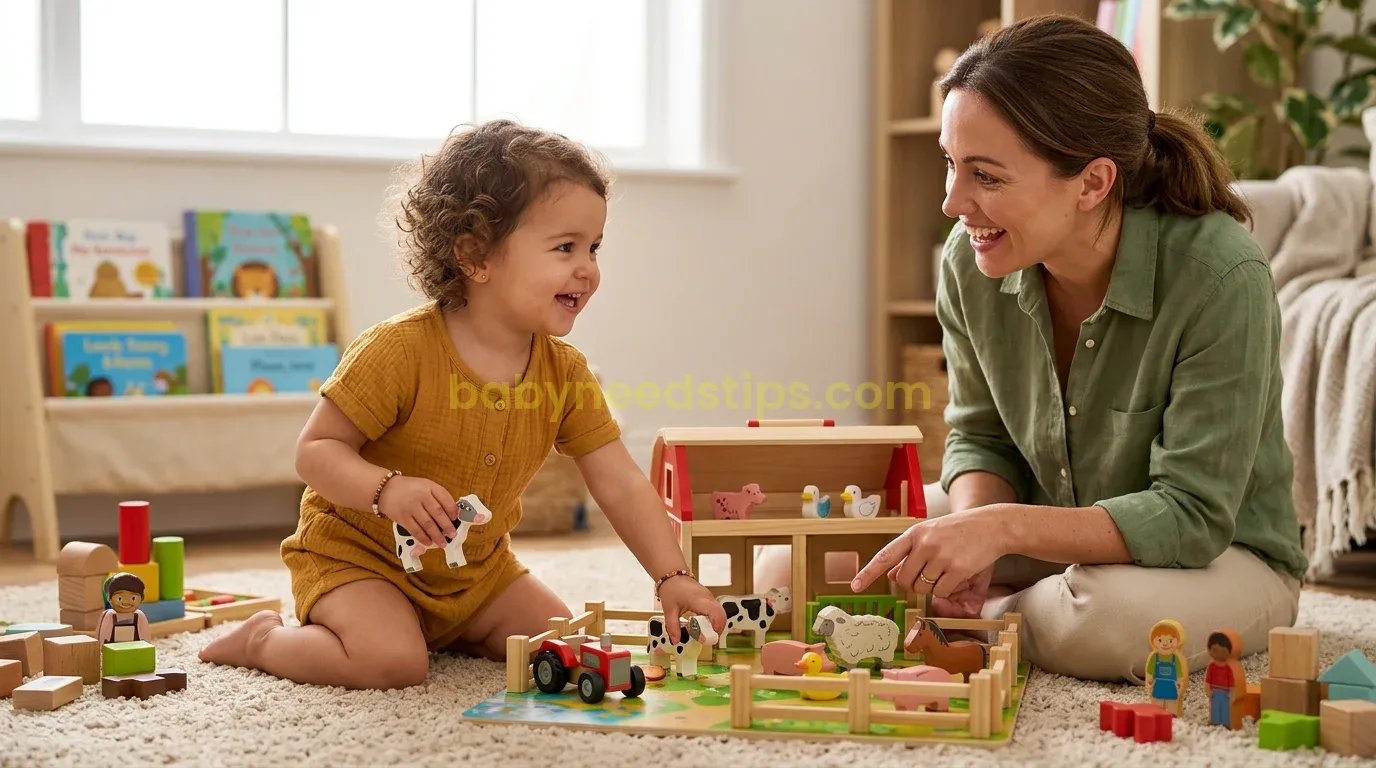
You don’t need expensive high-tech gadgets to boost vocabulary. In fact, many experts in 2026 suggest that “low-tech” toys often provide “high-talk” opportunities.
- Open-Ended Toys: Blocks, silk scarves, and cardboard boxes require the child to use language to define what the toy “is” today. A box can be a boat, a house, or a rocket ship.
- Sensory Bins: Filling a container with rice, beans, or water and hiding small plastic animals inside encourages descriptive language. Is the rice crunchy? Is the water cold? Is the frog hidden?
- Picture Books with No Words: These are incredible for older toddlers. They force the child (and you) to describe the action, the emotions of the characters, and predict what happens next, fostering complex sentence structures.
💡 Önemli: The best toy for a toddler’s language development is a focused adult who is willing to follow the child’s lead for 15 minutes a day.
Navigating Digital Integration and Speech Development
In 2026, we are surrounded by AI-driven toys and educational apps. While these can be supplementary, the consensus among pediatricians remains firm: digital interaction is “passive” compared to human interaction.
If you do use educational media, make it “Co-viewing.” Instead of handing the tablet to the toddler, sit with them. Ask questions about the characters. “Why is the bear sad?” or “Can you find the yellow triangle?” By turning a passive screen experience into an active social one, you mitigate the risks of speech delays associated with excessive, isolated screen time.
Furthermore, ensure that the audio-visual input doesn’t overwhelm the child. High-paced, frantic animations can actually hinder the “processing time” toddlers need to turn sounds into meanings.
When to Consult a Pediatric Speech Pathologist
While every child develops at their own pace, early intervention is the most effective way to address potential speech or language delays. In 2026, the criteria for seeking help have become more proactive to ensure children are ready for the social demands of preschool.
You should consider a professional evaluation if:
“Early intervention isn’t about ‘fixing’ a child; it’s about providing them with the tools to express their needs, reducing frustration for both the parent and the toddler.” — Pediatric Health Journal (2026)
Sonuç
Boosting your toddler’s vocabulary through play is an investment that pays dividends for years to come. By understanding the 2026 milestones and integrating simple, interactive strategies into your daily routine, you are doing more than teaching words; you are building the foundation for literacy, emotional intelligence, and social success.
Remember that your presence is the most powerful tool in your arsenal. Whether you are narrating the grocery shopping trip, playing with blocks on the living room floor, or reading a bedtime story, every interaction is a “brain-building” moment. Stay patient, keep it fun, and enjoy the incredible journey of hearing your child find their voice. For more tips on navigating the complexities of early childhood, visit babyneedstips.com for expert guidance tailored to modern parents.
Sıkça Sorulan Sorular
At what age should I be worried if my toddler isn’t talking?
While the “normal” range is broad, most pediatricians recommend an evaluation if a child has fewer than 10 words by 18 months or isn’t combining words by age two. Early screening is always better than a “wait and see” approach, as early support is highly effective.
Does “baby talk” hurt my child’s language development?
Using a high-pitched, melodic voice (often called “parentese”) is actually beneficial as it grabs a toddler’s attention. However, you should use real words with correct pronunciation rather than nonsense sounds. For example, say “Look at the doggy!” in a sing-song voice rather than “Look at the wawa.”
How many words should a 2-year-old have in 2026?
The general milestone for a 24-month-old is between 50 and 200 words. More importantly than the exact count is the progression of their language and their ability to start joining two words together to form simple functional phrases.
Can growing up in a bilingual household cause speech delays?
No, this is a common myth. While bilingual children might start speaking slightly later or mix the two languages (code-switching) initially, they typically reach total vocabulary milestones at the same rate as monolingual children. In the long run, bilingualism provides significant cognitive advantages.
Are educational apps better than traditional books for vocabulary?
Research in 2026 continues to show that physical books are superior for language acquisition. The tactile experience of turning pages and the lack of distracting “pings” or “rewards” in a book allow for deeper focus and more meaningful conversation between the parent and child.
How does physical activity affect language?
Gross motor play, like running and jumping, is closely linked to language development. Physical movement helps organize the nervous system and can actually “unlock” speech in some toddlers. Activities like “The Floor is Lava” or “Hide and Seek” are excellent for teaching prepositional language and turn-taking.
What is “Serve and Return” interaction?
This refers to a back-and-forth interaction where the child “serves” a communication (a look, a gesture, a word) and the adult “returns” it with a response. This cycle is the fundamental building block of brain architecture and is the most effective way to boost vocabulary through play.